9 to 5 vs. Jolene: Dolly Parton's Catalog Is Still Deciding Which Song Wins
Three weeks after Dolly Parton's death, her catalog is still moving on the charts in real time -- and on the September 12 Hot 100, '9 to 5' quietly passed 'Jolene' to become her highest-charting song, a title 'Jolene' had held since 1974.
 By Song Reviews · September 18, 2026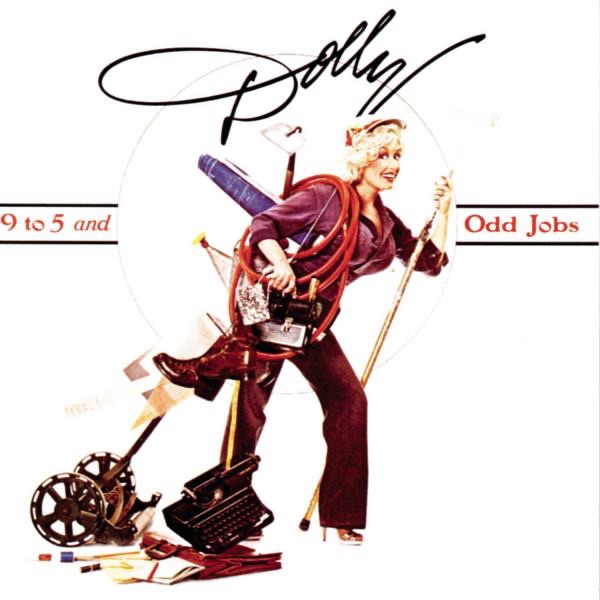
Dolly Parton died on August 25, 2026, at 80, and the chart story that followed has kept moving for three straight weeks in a way that’s genuinely unusual even for an artist of her stature. Streaming catalogs almost always spike after an artist’s death; what’s rarer is a second act inside that spike, where the songs themselves keep trading places with each other as the moment stretches on. That’s what’s happening right now between two of Dolly Parton’s most identifiable songs, and as of the chart dated September 12, it has an actual answer, at least for this week: “9 to 5” has passed “Jolene” to become her highest-charting Hot 100 entry, a distinction “Jolene” had effectively owned since 1974.
The two songs got to this point by very different roads. “Jolene” spent five decades as the more culturally dominant of the two – endlessly covered, referenced, and reintroduced to new listeners well before Parton’s death, which is exactly why its post-death surge looked, at first, like the obvious headline: the song hit a new all-time chart peak in the immediate aftermath, climbing to No. 16, a mark it had never reached even at original release in 1973 when its prior peak topped out at No. 60. That’s already a strange kind of achievement – a fifty-year-old song outperforming its own debut because of what happened to its writer, not because of anything new about the recording itself. “9 to 5,” meanwhile, had a more direct assist: ABC aired the 1980 film of the same name on August 30, five days after Parton’s death, and the resulting attention translated into real, trackable streaming gains – a 4% week-over-week jump to 9.8 million official U.S. streams in the days that followed, a boost “Jolene” didn’t have an equivalent trigger for.
That combination of factors is what flipped the order. On the September 12 chart, “9 to 5” sits at its new high mark while “Jolene” has cooled slightly from its own peak – a genuine lead change between two songs that have spent fifty years being discussed as a pair rather than ranked against each other. It’s a small distinction in the scheme of an artist’s whole catalog, but it’s a real one, and it’s still moving: Parton also became Billboard’s Hot 100 Songwriters Chart No. 1 for the first time in her career during this same stretch, credited for sole authorship of “Jolene,” “9 to 5,” and “I Will Always Love You” all landing in the Hot 100’s top 40 simultaneously – a chart most listeners don’t track week to week, built specifically to credit the writer’s share of co-written hits, and one Parton had never topped before despite writing three of country music’s most enduring songs entirely on her own.
There’s an obvious tension in covering any of this closely: chart movement driven by an artist’s death is not, on its own, a compliment to the music, and treating it as a straightforward celebration risks reading as opportunistic in exactly the way this column tries to avoid. But the more honest read of what’s actually happening here isn’t morbid curiosity cycling two old songs up a chart – it’s an unusually large audience, given a reason to actually listen closely for the first time in years, discovering in real time that “9 to 5” has more in it than its reputation as a workplace-comedy theme song usually gets credit for: a tightly written verse structure, a vocal performance built for radio clarity over five decades before radio clarity became a production afterthought, and a chorus so durable it survived becoming a film title, a Broadway musical, and now, briefly, the answer to a question “Jolene” had already settled fifty years ago. Grief drove the audience back to the catalog. What they’re finding, three weeks in, is that the catalog was deep enough to still have a genuine surprise sitting in it.
Hero image: “9 to 5 and Odd Jobs” single artwork, RCA Records. Used under fair use for editorial commentary.