Ride Lonesome: Beck's Lead Single Was the Right Bet for an Album Critics Still Can't Agree On
Beck released 'Ride Lonesome' in April with no album attached. Seven days ago the record it turned out to open finally arrived, his first in seven years, and the reviews are split between 'drop-dead gorgeous' and 'repetitive' -- a fight that starts with this one song.
 By Song Reviews · September 25, 2026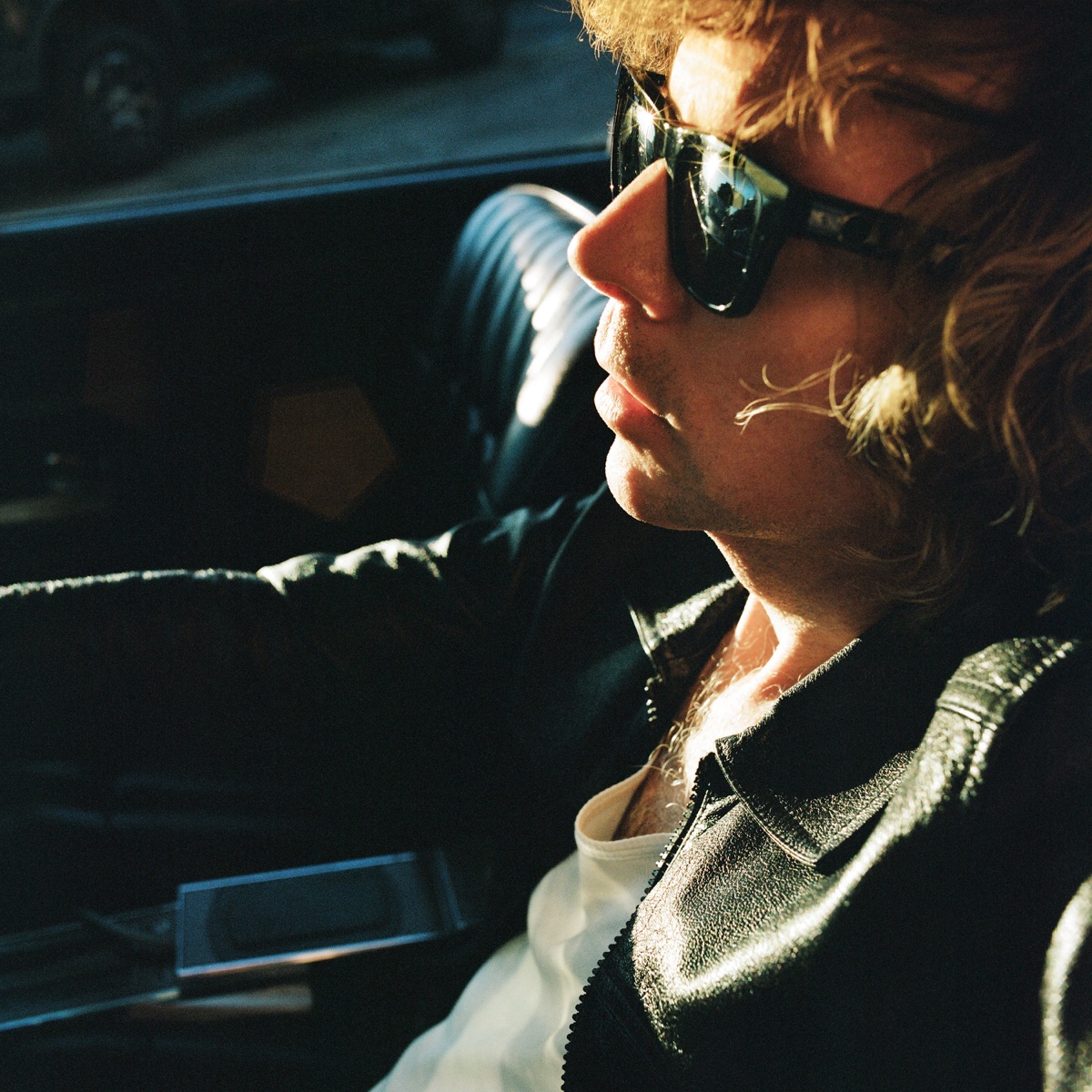
Beck’s “Ride Lonesome” arrived on April 20, 2026 with no album attached to it. There was a video, directed by Beck and Mikai Karl, and there was the announcement of a North American tour, and that was all – a self-written, self-produced single from an artist who had not released a proper studio album since Hyperspace in 2019. It only became the opening track of something larger on July 15, when Beck announced a fifteenth album of the same name and put out a second single, “In the Night.” That record landed a week ago, on September 18, on Capitol, and it has been dividing critics ever since. The reason to spend a Friday on the title track is that nearly every argument about the album can be heard, in miniature, in this one four-and-a-half-minute song.
The backstory matters less than it usually does, but a little of it is load-bearing. Ride Lonesome is, by Wikipedia’s count, the longest gap between studio albums in Beck’s career. It was preceded in January by Everybody’s Gotta Learn Sometime, a compilation of covers and rarities that Beck dropped without warning, and in between he has said he was busy: in his April conversation with NPR’s Robin Hilton he said he had done a song with Gorillaz and another with Paul McCartney, helped write the Black Keys album Ohio Players, and built himself a recording studio. The album itself was recorded in Room B at United Studios in Hollywood, and the personnel list reads like a reunion: Smokey Hormel, Joey Waronker, Justin Meldal-Johnsen, Roger Joseph Manning Jr. and Jason Falkner, musicians who between them have played on Mutations, Sea Change and Morning Phase. Beck produced; Nigel Godrich, who produced Sea Change, mixed. Nobody involved is pretending this is a departure. It is a deliberate return to the room where his quietest records were made.
That is exactly why the first-listen reaction to the single was so consistent. Consequence, which noted that the track “begins with, well, a lonesome acoustic guitar before bringing in piano, slide guitar, and strings,” called it a welcome return for listeners put off by “the slick production and pop-leaning direction” of Beck’s last two studio records, Colors and Hyperspace. Stereogum’s Chris DeVille heard the “earnest baritone” and “cosmic country sounds and swirling orchestral beauty,” and wondered aloud whether a third entry in the Sea Change and Morning Phase run was on the way. The single did not get much argument in April because it was not asking for any. It sat in a groove Beck had already proven he could occupy, and it occupied it well.
What the song actually does is worth slowing down for, because it is doing something a little more stubborn than a typical sad-guy ballad. Beck’s own description of it, again to NPR, is the best guide: “It was one of those times in your life when you’re taking things in, where you’ve been and where you’re going… when you’re going through difficult things, often you have to get through it yourself. You just have to move forward through whatever landscape of your life and circumstances you find yourself in. And I think it’s sort of that dark comfort of pushing through the parts of life that are maybe not as comfortable or easy, and having some distant faith that it will pull you through to the other side.” Read against the title, that is a precise design brief. The song is not a lament about being alone. It is an instruction for getting through it alone, and the “dark comfort” he names is the thing the record has to sell – resolve without a rescue. DeVille’s read of the chorus lands in the same place: it “does not strike me as particularly downcast or optimistic. It’s more about the need to pick yourself up and press onward.” He told NPR something else that is easy to skip past and probably explains the sound: “Sometimes [my music] is just a little too clever… Simplicity is the ultimate.” The single is the proof of concept for that sentence.
Which brings us to the argument the album has produced. The reviews, taken together, are not a consensus. NME called the record “a drop-dead gorgeous meditation on heartache and solitude” and singled out the title track as setting the tone for a suite of songs that is “more spectral and ethereal than its predecessors.” Record Collector praised its “luxurious orchestral arrangements.” On the other side, Paste gave it a B-, arguing that some tracks sound derivative of Beck’s earlier folk work and that the arrangements can feel stagnant when the strings step away; Far Out gave it 3.5 out of 5 and found the sparse arrangements can “stifle its ability to grow” in the final third; and Spectrum Culture scored it 53 percent and called it repetitive and musically conservative, faulting Beck for neglecting “one of his main strengths, which is to be musically daring.” Wikipedia’s tally has the record at 84 out of 100 on Metacritic across sixteen reviews, which is “universal acclaim” territory, so the skeptics are a minority – but a specific one. Every one of their complaints is a complaint about what “Ride Lonesome” the song also is: careful, beautiful, and very close to something he has already made.
That is the tension, and it is a fair one. If you have Sea Change and Morning Phase in your life, the single is a comfortable place to stand; if you were hoping for the Beck who cannot sit still, it is a closed door. Song Reviews’ read is that the song earns its place anyway, for one reason that the mixed-review pile actually supports. A return to a familiar sound is only a cop-out when the songs inside it are coasting, and the strongest praise for this album, from NME’s note of the “devastating directness” of a song like “Falling Through My Hands” to Record Collector’s account of a cycle about loss, grief and acceptance, is about the writing rather than the palette. The title track is the cleanest example. It commits to a single emotional posture – keep moving, keep quiet, trust it will come out somewhere – and the arrangement adds instruments one at a time, guitar, then piano, slide and strings, rather than swelling to tell you how to feel. That restraint is what the critics who love the record are responding to, and what the critics who don’t are responding to as well; they are disagreeing about whether restraint alone is enough for an hour of music. For one song, at four minutes and change, it is.
There is also a live footnote, because the tour that was announced alongside the single opened this week, and it added a wrinkle. Beck kicked off the Ride Lonesome Tour at the Santa Barbara Bowl on Tuesday, September 22 with a 24-song set that included live debuts of nine tracks from the new album, according to Setlist.fm. The title track went in the number two slot that night, and was moved to number 20 the following night at the Greek Theatre in Los Angeles. The staging, by the Santa Barbara Independent’s account, was more ambitious than it was smooth: reviewer Josef Woodard described “long, awkward lapses” while crews rebuilt a different stage set for almost every song, and quoted Beck on the difficulties – “we’re figuring it out. That’s the charm of doing things in a different way.” An artist willing to build a set that clumsy to serve songs about being alone is, at minimum, not coasting.
So the most honest summary of “Ride Lonesome” is the least exciting-sounding one. It is a very good song from a musician returning to the thing he is best at, at a moment when the album around it has not settled into a verdict. The fact that the argument exists at all is a point in the record’s favor. A collection this quiet does not usually get people this worked up.
Hero image: “Ride Lonesome” single cover art, Iliad Records / Capitol Records. Used under fair use for editorial commentary.