Nicole Kidman: A Song With an Actress's Name for a Title Just Knocked 'Choosin' Texas' Off Spotify's Daily No. 1
ADÉLA's 'Nicole Kidman' looks like a novelty built on a name-drop, and it has just jumped from No. 45 to No. 22 on the Hot 100 and taken the top spot on Spotify's daily U.S. chart. What's actually holding the joke up is a 1986 gospel record and a chart run the joke alone can't explain.
 By Song Reviews · October 2, 2026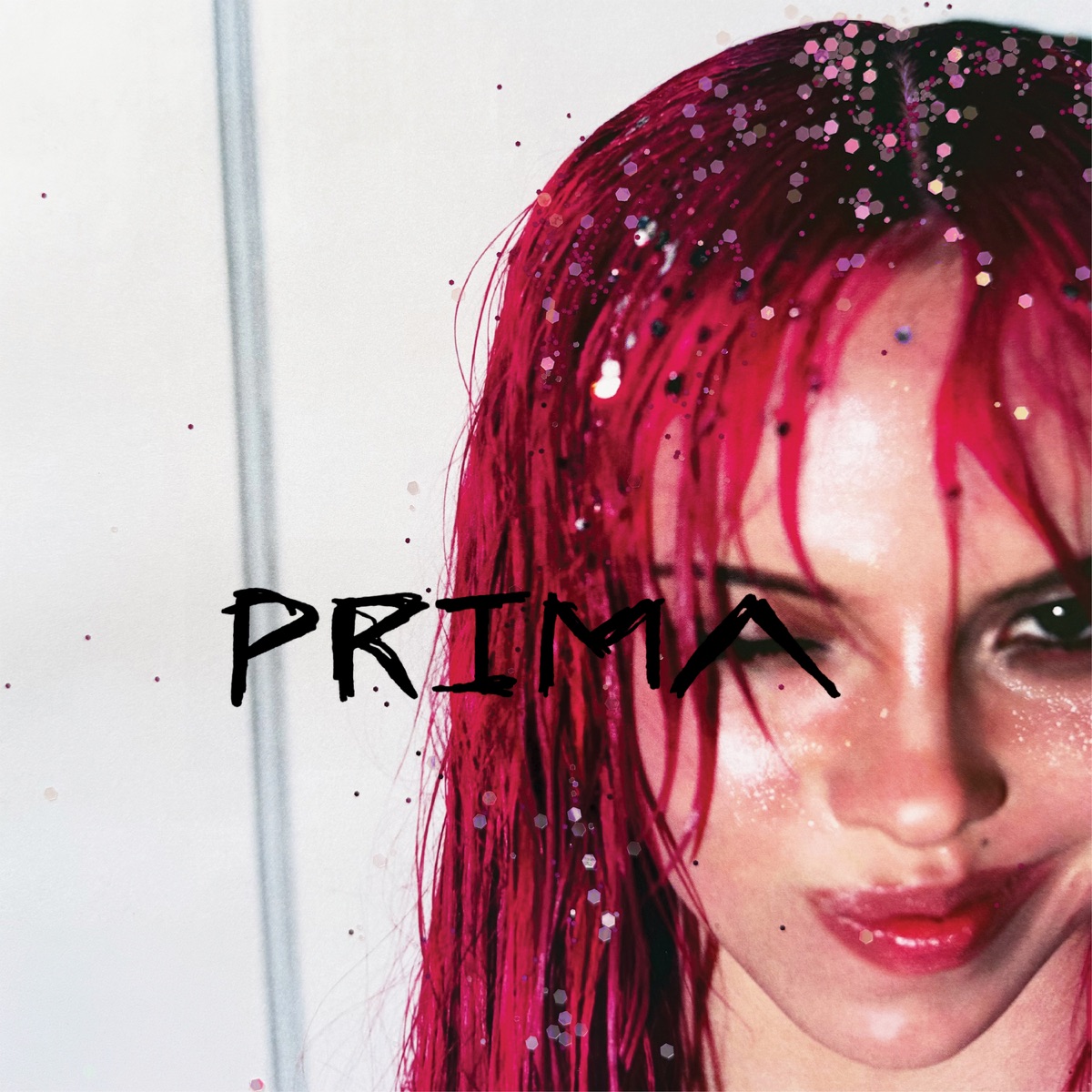
A song named after a famous actress is a hard sell in the abstract. It is a joke with an expiration date, the kind of premise a pop star can get one good video out of and nothing else. That is the reasonable first reaction to ADÉLA’s “Nicole Kidman,” and it is a reaction the song’s own numbers have been quietly disproving for a month. On the Billboard Hot 100 dated September 26, it jumped from No. 45 to No. 22. On Tuesday, September 22, according to Billboard, it took the No. 1 spot on Spotify’s Daily Top Songs USA from Ella Langley’s “Choosin’ Texas” – the song that has now spent a record 23 weeks at the top of the Hot 100. A novelty does not usually do that. So this week’s Feature Friday asks what, exactly, is underneath the name.
Start with who ADÉLA is, because the answer is not a manufactured pop star. She is 22, Slovak, born in Bratislava, and trained as a ballet dancer before music, including at the Vienna State Ballet and the English National Ballet School, according to her Wikipedia biography. In 2023 she was one of the contestants on Dream Academy, the reality show that eventually launched the group Katseye, and she was among the first eliminated. Billboard notes she was “one of the first contestants eliminated from the program”; she went on to release her own singles anyway, signed to Capitol in 2025, and in 2026 opened for Demi Lovato before launching her own headline tour. Her debut album Prima, released September 4, entered the Billboard 200 at No. 4 with 56,000 equivalent units, the highest debut for a full-length first studio album so far this year, per Billboard. Its predecessor single, “Ain’t in LA,” made her the first Slovak artist on the Hot 100, according to Wikipedia. “Nicole Kidman” is her second entry, and Billboard noted this week that it “has already eclipsed her first.”
The song’s origin is an anecdote, told to W Magazine. She was invited to a Golden Globes party in January, and: “I’ve never been in a movie, but I got all glammed up, and my corset was so tight that I thought, ‘I feel like Nicole Kidman right now.’” That is the whole premise, and it is a good one precisely because it is small. The song is not about Kidman. It is about a specific feeling of being dressed as someone you are not yet, in a room you are not sure you belong in, and Kidman is the shorthand for that glamour. The credits are less modest than the premise: the song is written by ADÉLA with Blake Slatkin, Dylan Brady of 100 gecs, Julia Michaels, Billy Walsh and Uffie, and produced by Slatkin and Brady, according to Wikipedia; the two also executive-produced the album, per W Magazine. It runs three minutes and one second.
Then there is the part that separates it from a gimmick: the sample. Billboard reports that the beat lifts “In My Father’s House,” the second track on the 1986 album Praise Him by God’s Gospel Angels. That gospel record was not unknown to hip-hop before ADÉLA found it. Detroit’s Boldy James and producer Conductor Williams rapped over it on “Terms and Conditions” in 2024, and Chicago’s G Herbo used it on “Fallen Soldiers” in 2025. The Billboard writer who spotted the connection had loved the Boldy James track since 2024 and admitted to not placing ADÉLA’s beat at first: “The beats aren’t identical, but the way the sample is chopped up is pretty similar.” The Sydney Morning Herald’s critics compared the song’s sound to Kanye West’s “golden-era chiptune soul,” which is the right lineage, and it points to what the production is doing: a chopped sample of an old record carrying the emotional weight while the pop performance sits on top of it. A name-drop chorus over a generic beat would be spent by the second listen. A name-drop chorus over a gospel loop has a floor under it.
The pop performance is where Billboard’s description is most useful. It credits ADÉLA’s “Doja Cat and Ariana Grande-nodding delivery” and “slick lyrical callbacks to Kidman’s discography,” and calls the track “breezy.” The music video, directed by Hannah Lux Davis and released September 4, is where those callbacks turn literal: it references To Die For, Eyes Wide Shut, Moulin Rouge!, Birth and Babygirl, plus Kidman’s own 2021 AMC Theatres ad. The Sydney Morning Herald’s review allowed that the song’s “handful of tacky references” still make it “feel effortlessly fun,” which is a fair summary of the risk and the payoff: the references are the type of thing that could sink a track, and here they are held in place by the performance and the loop beneath.
What actually sent it up the chart, as opposed to what made it a good idea, is a combination that a novelty rarely gets. Billboard’s tally has “Nicole Kidman” at 5.76 million official on-demand U.S. streams in its first week (September 4 to 10), then 9.59 million the following week, a 66 percent jump. It also has more than 1.5 million uses on TikTok, more than 131,000 plays on Instagram Reels, and 10 million views of the video, which is a lot of platform-native behavior for a three-minute song. And it has, importantly, the real Nicole Kidman. At the London premiere of Practical Magic 2 on August 26, when a fan asked whether she knew ADÉLA, Kidman said, per W Magazine, that she absolutely knew who ADÉLA was, that ADÉLA was coming to Nashville, and “I’m going to go see her.” According to W, Kidman made her TikTok debut the next day, set to ADÉLA’s other hit, “Ain’t in LA.” Whether she made it to the Basement East on September 21, the date of the Nashville show, is not something we could confirm from reporting available at the time of writing, and we are not going to guess.
Endorsements, though, are a spark and not a fire, and the numbers kept climbing after the spark. The song came out September 4, weeks after Kidman’s premiere remark, and its streaming growth came in the weeks that followed. Billboard has 6.14 million official streams during September 11 to 15 and 9.3 million for the equivalent five days a week later (September 18 to 22), up 51 percent. Globally, the picture is consistent: Wikipedia’s chart table has the song peaking so far at No. 11 on Billboard’s Global 200 and No. 21 on the Canadian Hot 100, and lists top-ten peaks in several countries, including the United Kingdom and Ireland.
Critical opinion on the album around it is more measured, and it is worth saying so. Prima sits at 69 on Metacritic, “generally favorable” by that site’s scale, with Clash at 8/10 and Pitchfork at 5.7/10, per Wikipedia’s ratings table. The album is not being received as a masterpiece. The song is being received as a hit, which is a different thing.
Song Reviews’ read: “Nicole Kidman” is a better song than its title has any right to be, and the reason is the least glamorous part of it. The joke gets attention; the gospel-sample production gets people to stay. A track that is only a name-drop is done when the name stops being funny. A track that is a name-drop over a warm 1986 loop that three unrelated artists have now found irresistible has a chance of outliving the joke. Whether it does is a chart story for the coming weeks, and one this column will follow, but the more interesting thing is already visible. Popular music keeps turning out to run on the same small stock of old records; the surprise is only ever who finds them next.
Hero image: “PRIMA” album cover art, Capitol Records. Used under fair use for editorial commentary.