Feature Friday: How a Biopic Nobody Trusted Became the Highest-Grossing Music Movie Ever Made
Michael Jackson's 'Michael' was delayed four times, cast an unknown nephew in the lead role, and still became the highest-grossing music biopic in North American history -- and this week it just pushed the title track to a new all-time Hot 100 peak, 44 years after release.
 By Song Reviews · November 20, 2026
Every ingredient of “Michael” looked, on paper, like a cautionary tale in progress. A biopic of Michael Jackson, announced years before it actually arrived, delayed repeatedly – most recently bumped from a planned fall 2025 window to an April 2026 release that itself had been pushed back more than once. A lead role filled not by an established actor but by Jaafar Jackson, the singer’s own nephew, in his film debut, with the obvious family connection inviting exactly the kind of skepticism that greets any biopic where casting looks more like a tribute than a decision. A subject whose life story, by the time production even started, had already been exhaustively covered, relitigated, and argued over in documentaries, tabloids, and court filings for the better part of two decades. Nothing about that combination suggested a hit.
It became one anyway, decisively. Directed by Antoine Fuqua from a John Logan screenplay and released through Lionsgate and Universal on April 24, 2026, “Michael” has grossed more than $577 million worldwide, overtaking “Bohemian Rhapsody” as the highest-grossing music biopic in North American history. Critics and audiences alike singled out Jaafar Jackson’s performance – the same nepotism-adjacent casting choice that invited skepticism going in became the film’s biggest asset coming out, reviewers repeatedly noting an uncanny physical and vocal resemblance that no amount of makeup or choreography coaching could have faked on an actor without the actual bloodline behind it.
What makes the film’s success worth a Feature Friday treatment seven months after release, rather than back in April, is what’s happened to the catalog underneath it since. The resurgence didn’t peak and fade the way a typical biopic bump usually does – it’s been compounding. By May, “Thriller” and Number Ones had both re-entered the top 10 of their respective charts, “Billie Jean” was back in the Hot 100’s top 20, and Jackson became the first artist in history with a top-10 Hot 100 hit in six separate decades. Spotify’s global daily artist rankings put him at No. 1, ahead of Bad Bunny, months after the film’s theatrical run had already ended. And this week, “Thriller” the single – not the album, the actual 1982 song – posted a new all-time Hot 100 peak of No. 2, jumping 18 spots on a combination of Halloween streaming and a biopic halo effect that, seven months in, shows no real sign of fading on its own schedule.
The mechanism here is worth isolating from the specific film, because it’s become a repeatable pattern rather than a one-off: a biopic doesn’t just send old fans back to a familiar catalog, it introduces that catalog, often for the first time, to an audience with no original memory of the material at all. “Michael” didn’t need to be a great film to trigger this – reviews were mixed-to-positive, not uniformly rapturous – it needed to be a film people actually went and saw, in numbers large enough to put Jackson’s name back in front of listeners who’d only ever encountered his music as ambient cultural wallpaper rather than something worth actively seeking out. Forty-four years after “Thriller” peaked at a merely respectable No. 4, a movie about the man who made it just got the song further than the song itself ever got alone. That’s not nostalgia working as intended. It’s nostalgia working on an audience that was never old enough to be nostalgic in the first place.
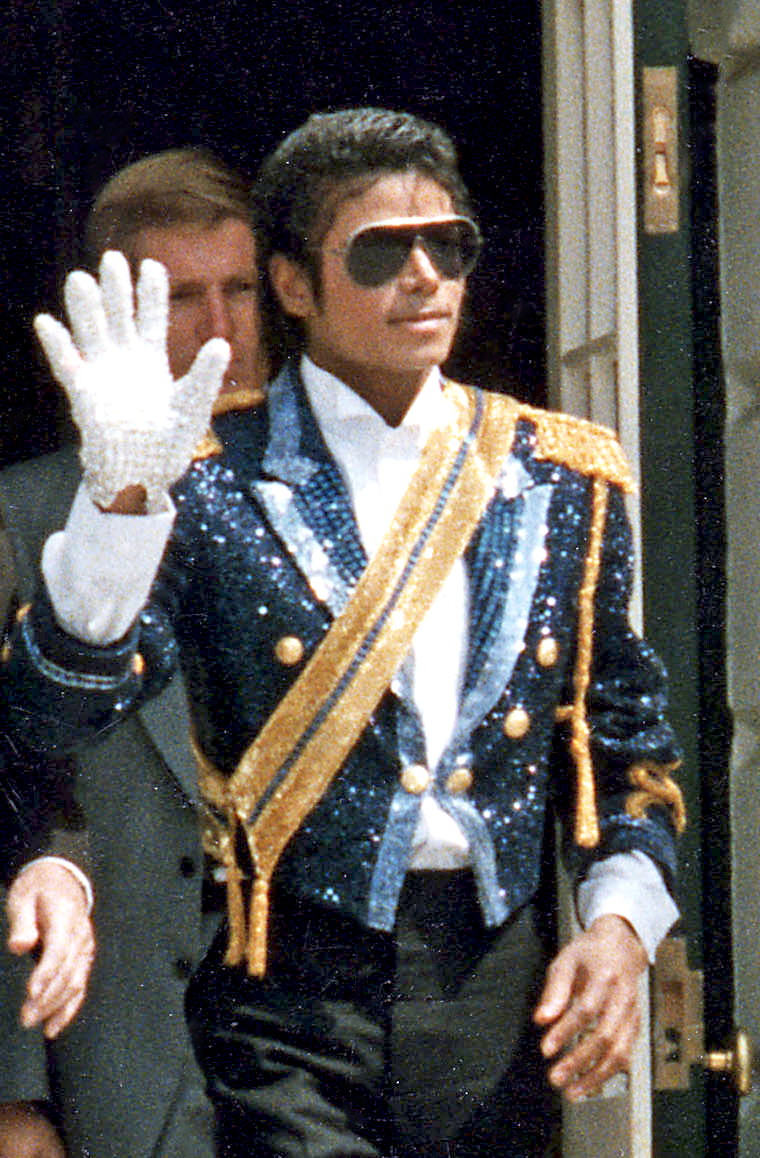
Hero image: Michael Jackson, White House Rose Garden, May 14, 1984. White House Photo Office, public domain.