Sacred Sunday: 'Blessed Assurance,' Three Ways, Plus Three Songs That Refuse to Rush Their Own Certainty
Mahalia Jackson, Judy Collins, and Brandon Lake take on Fanny Crosby's 1873 hymn of total certainty, while Jonathan McReynolds, Josiah Queen, and Sinach all write new songs that earn their certainty the slow way instead of declaring it upfront.
 By Song Reviews · October 11, 2026
What Sacred Sunday Is
Every Sunday, Song Reviews takes sacred music seriously enough to actually criticize it – what the music does, where it came from, and whether it earns the reaction it asks for, the same way any other day’s coverage works. It isn’t a tribute day. Every entry carries a real score.
What We’re Covering Today
The Hymn
Fanny Crosby, blind since infancy, wrote “Blessed Assurance” in 1873 after her friend Phoebe Knapp played her an unnamed melody and asked what it said to her; Crosby’s reported reply, “Blessed assurance, Jesus is mine,” became the hymn’s opening line within the hour. Three recordings, 1961 to today:
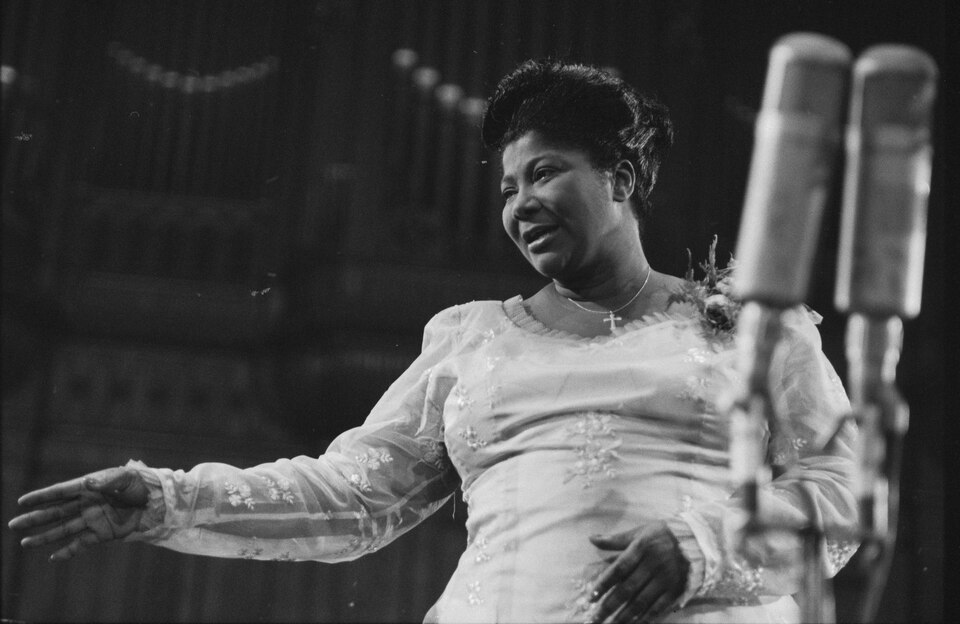
- Mahalia Jackson – 8.5/10. A 1961 concert reading that saves its full-voiced power for the chorus, after building the verses low and plain.
- Judy Collins – 7.6/10. A single clear soprano over sparse acoustic guitar, closer to her own “Amazing Grace” than to any gospel arrangement of the text.
- Brandon Lake – 7.2/10. A modern arena-worship build with an added bridge, engineered for a crowd to sing back.
New Religious Songs
- Jonathan McReynolds – “Make It Make Sense” – 8.1/10. A gospel song that asks and doesn’t claim to have gotten an answer.
- Josiah Queen – “Back to the Altar” – 7.8/10. The “Dusty Bibles” follow-up, with the accusation turned inward.
- Sinach – “Never Failing” – 8.3/10. A new attempt at the same translatable simplicity that made “Way Maker” a global standard.
What Connects Them
Crosby’s hymn makes its claim in its very first line and never retreats from it – “blessed assurance” is certainty stated before it’s been demonstrated, and the job of a good recording is to earn that certainty retroactively. The three covers take three different paths to the same proof: Jackson earns it through vocal power visibly held in reserve until the chorus demands it; Collins earns it through the intimacy of a single unaccompanied voice, trading scale for plausibility; Lake earns it, less successfully, through the sheer momentum of a full-band build that’s more convincing live than it is as a reading of Crosby’s actual words. The scores track how convincingly each version closes the gap between declaring certainty and demonstrating it.
The three new songs invert the hymn’s structure entirely, and that inversion is this week’s thread. Where Crosby opens with the answer, all three of this week’s new songs stay in the question. McReynolds’ “Make It Make Sense” names real, unresolved griefs and refuses to convert them into triumph by the bridge. Queen’s “Back to the Altar” turns last year’s outward accusation into a private confession with no tidy resolution attached. Sinach’s “Never Failing” is the odd one out structurally – it is a declaration, like the hymn – but it earns its confidence the same way “Way Maker” did five years ago: through deliberately simple, translatable language built to survive being sung by people who’ve never heard of her, rather than through force of personality. Put the hymn and the three new songs side by side and the real thread isn’t sacred versus secular or old versus new. It’s where a song chooses to put its certainty – stated up front and earned backward, like Crosby’s text, or withheld until the writing has actually done the work to deserve it, like two-thirds of this week’s new songs. Both are legitimate ways to write about faith. The weaker entries this week are the ones that reach for the first approach without doing the work the second one requires.
Hero image: Mahalia Jackson in concert, Kongresshaus Zürich, 1961, Comet Photo AG, ETH-Bibliothek Zürich, licensed under CC BY-SA 4.0.