Sacred Sunday: An 8th-Century Irish Prayer, Three Ways, Plus Three New Songs About What Surrender Actually Costs
'Be Thou My Vision' as recorded by Van Morrison, Audrey Assad, and Keith & Kristyn Getty, plus three new songs -- from Katy Nichole, Lauren Daigle, and Forrest Frank with Thomas Rhett -- about what it actually takes to let go of control.
 By Song Reviews · October 18, 2026
What Sacred Sunday Is
Every Sunday, Song Reviews takes sacred music seriously enough to actually criticize it – what the music does, where it came from, and whether it earns the reaction it asks for, the same way any other day’s coverage works. It isn’t a tribute day. Every entry carries a real score.
What We’re Covering Today
The Hymn
“Be Thou My Vision” traces to an 8th-century Irish text, translated into English prose by Mary Byrne in 1905 and versified by Eleanor Hull in 1912, set to the traditional Irish folk melody “Slane.” Three recordings, 1991 to 2021:
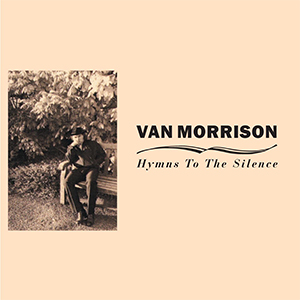
- Van Morrison – 8.1/10. From 1991’s Hymns to the Silence, treating the ancient text with the same loose, circling phrasing he brings to his own songwriting.
- Audrey Assad – 8.4/10. From 2016’s Inheritance, the most liturgically patient of the three, built to be prayed rather than performed.
- Keith & Kristyn Getty – 7.9/10. From 2021’s Grammy-nominated Confessio: Irish American Roots, built for a congregation to sing back.
New Religious Songs
- Katy Nichole – “Have Your Way” – 7.6/10. A deliberate song of surrender that sits in the cost of meaning it, rather than rushing to resolve it.
- Lauren Daigle – “Let It Be a Hallelujah” – 7.8/10. A decade-old vault track, finally released for her debut album’s tenth anniversary.
- Forrest Frank feat. Thomas Rhett – “Nothing Else” – 7.0/10. A radio-built country-pop crossover that trades some of Frank’s usual rawness for a bigger audience.
What Connects Them
“Be Thou My Vision” asks for a specific, total kind of surrender – not just belief, but the full reordering of what the singer values, stated bluntly in its own text: “Riches I heed not, nor man’s empty praise.” All three of this week’s new songs are circling the same request from a very different angle, and the thread worth pulling on is how each one handles the actual difficulty of asking for it. Katy Nichole’s “Have Your Way” is the most direct descendant of the hymn’s own posture, naming the cost of surrender outright rather than skipping past it. Lauren Daigle’s “Let It Be a Hallelujah” approaches the idea sideways, through gratitude in hardship rather than through a request for control to be taken away – a related but distinct kind of letting go. Forrest Frank and Thomas Rhett’s “Nothing Else” is the odd one out: a crossover single built more for reach than for theological precision, where the “nothing else matters” sentiment in the title functions more as a hook than a genuinely examined idea.
That gap is the real story of this week’s slate. The hymn and the Nichole song both do the harder work of sitting inside the discomfort of actually giving something up; the Getty recording and the Frank/Rhett single both, in their different registers, prioritize accessibility – a congregation that can sing along, a crossover audience that can hum the chorus – over the kind of unflinching specificity that makes a song like Assad’s “Be Thou My Vision” or Nichole’s “Have Your Way” cut deeper. Both goals are legitimate. A hymn meant to be sung by a room full of people who’ve never heard it before has a different job than one meant to be sat with privately. The strongest entries this week are the ones that found a way to do both at once.
Hero image: “Hymns to the Silence” album cover art, Polydor Records. Used under fair use for editorial commentary.