Sacred Sunday: A Hymn Built for a Cathedral, Sung Three Ways to See If It Still Needs One
'Holy, Holy, Holy,' Reginald Heber's 1826 Trinity Sunday hymn, three ways -- Mahalia Jackson, Sufjan Stevens, and the Tabernacle Choir at Temple Square -- plus three new songs from Brandon Lake & Phil Wickham, Maverick City Music, and Forrest Frank that each scale the same declaration differently.
 By Song Reviews · November 22, 2026
What Sacred Sunday Is
Every Sunday, Song Reviews takes sacred music seriously enough to actually criticize it – what the music does, where it came from, and whether it earns the reaction it asks for, the same way any other day’s coverage works. It isn’t a tribute day. Every entry carries a real score.
What We’re Covering Today
The Hymn
Reginald Heber’s 1826 Trinity Sunday hymn “Holy, Holy, Holy! Lord God Almighty,” paired in 1861 with John B. Dykes’s tune NICAEA, thirty-five years after Heber’s death:
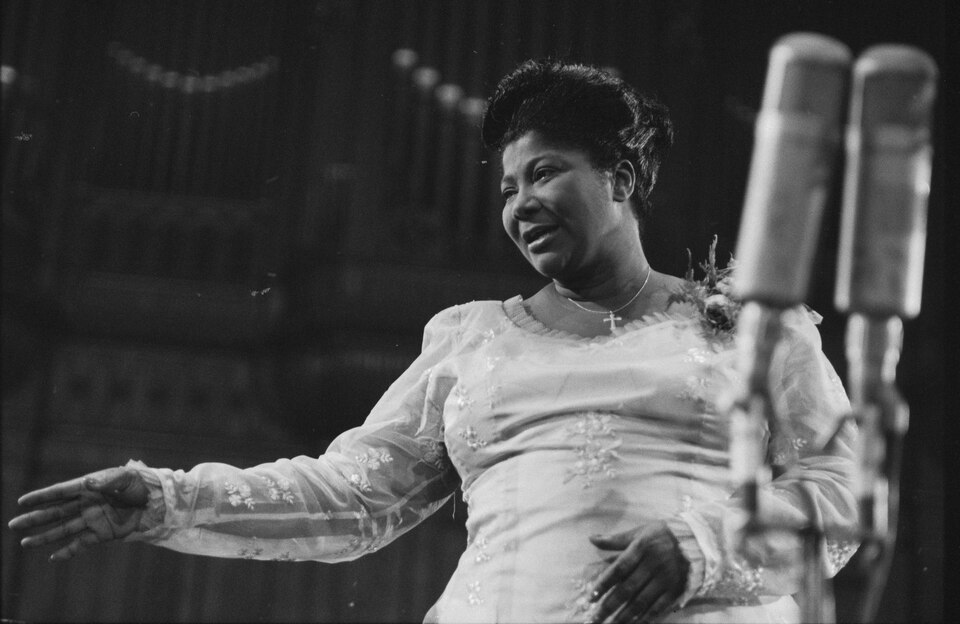
- Mahalia Jackson – 8.6/10. A solo voice taking on a hymn built for a congregation, and winning the argument that it didn’t need one.
- Sufjan Stevens – 7.9/10. A cathedral declaration whispered on a buried Christmas-box-set track instead.
- The Tabernacle Choir at Temple Square – 8.2/10. The hymn delivered at the scale it was actually written for, no reinterpretation required.
New Religious Songs
- Brandon Lake & Phil Wickham – “Love of God” – 7.6/10. A “modern hymn” that earns the structure but hasn’t yet earned the staying power the label implies.
- Maverick City Music – “Refiner” – 8.4/10. A request to be stripped down and reshaped, not lifted up, carried by a vocal that never resolves into easy triumph.
- Forrest Frank – “Jesus Is Alive!” – 7.2/10. An effective communal chant that trades away the quiet intimacy that made its own artist worth discovering in the first place.
What Connects Them
Reginald Heber wrote “Holy, Holy, Holy” to be sung by his own parish between the sermon and the creed, at a time when hymn-singing inside Church of England liturgy was itself a mild act of rebellion – a text built, from its first use, for a room full of people declaring something together rather than for a single voice working through it alone. That built-in scale is the thing all three covers reviewed today are actually testing, each from a different distance. The Tabernacle Choir’s recording is the hymn operating exactly as designed: hundreds of voices, a full organ, a dynamic build that simply executes Heber’s escalating superlatives as written, no personal angle required because the arrangement already has hundreds of people providing one. Mahalia Jackson goes the opposite direction entirely, taking a text built for unison and making it sound like testimony instead – a woman who has already arrived at the hymn’s conclusion, reporting back rather than declaring alongside anyone. And Sufjan Stevens goes further still, burying a whispered, hushed, almost embarrassed-to-be-overheard version inside a sprawling five-volume Christmas box set where most listeners will never even find it. Three completely different answers to the same question: does a 200-year-old proclamation actually need the room it was built for?
The week’s three new songs ask a version of the same question from the writing side rather than the performing side. “Love of God” reaches explicitly for hymn status – plain statement, repeated verses, no bridge built for a key change – and gets most of the way there through structure alone, even if it leans on direct statement rather than the single durable image that’s kept hymns like “What a Friend We Have in Jesus” alive for 170 years. “Refiner” does the opposite of what most contemporary worship does: instead of asking to be lifted, comforted, or carried, it asks to be taken apart by fire, and Steffany Gretzinger’s unresolved, straining vocal refuses to let that request resolve into easy triumph. And “Jesus Is Alive!” abandons Forrest Frank’s usual hushed, bedroom-pop intimacy for something closer to a stadium chant – a real trade, not an accident, and one that costs the song some of what made its own artist distinctive in the first place.
Put together: a hymn that has survived two centuries by being sung at wildly different scales, and three new songs each making their own bet about whether a request to God works better whispered, chanted, or endured.
Hero image: Mahalia Jackson, publicity photo. Public domain.