Terrible Tuesday: A Sold-Out Arena, Twenty Minutes, and a Screen That Did the Apologizing
Tini Stoessel's FUTTTURA tour stop at Miami's Kaseya Center collapsed twenty minutes before doors, after a production company failed to deliver basic safety and technical requirements -- a disaster that says more about touring's supply chain than about any song.
 By Song Reviews · November 3, 2026
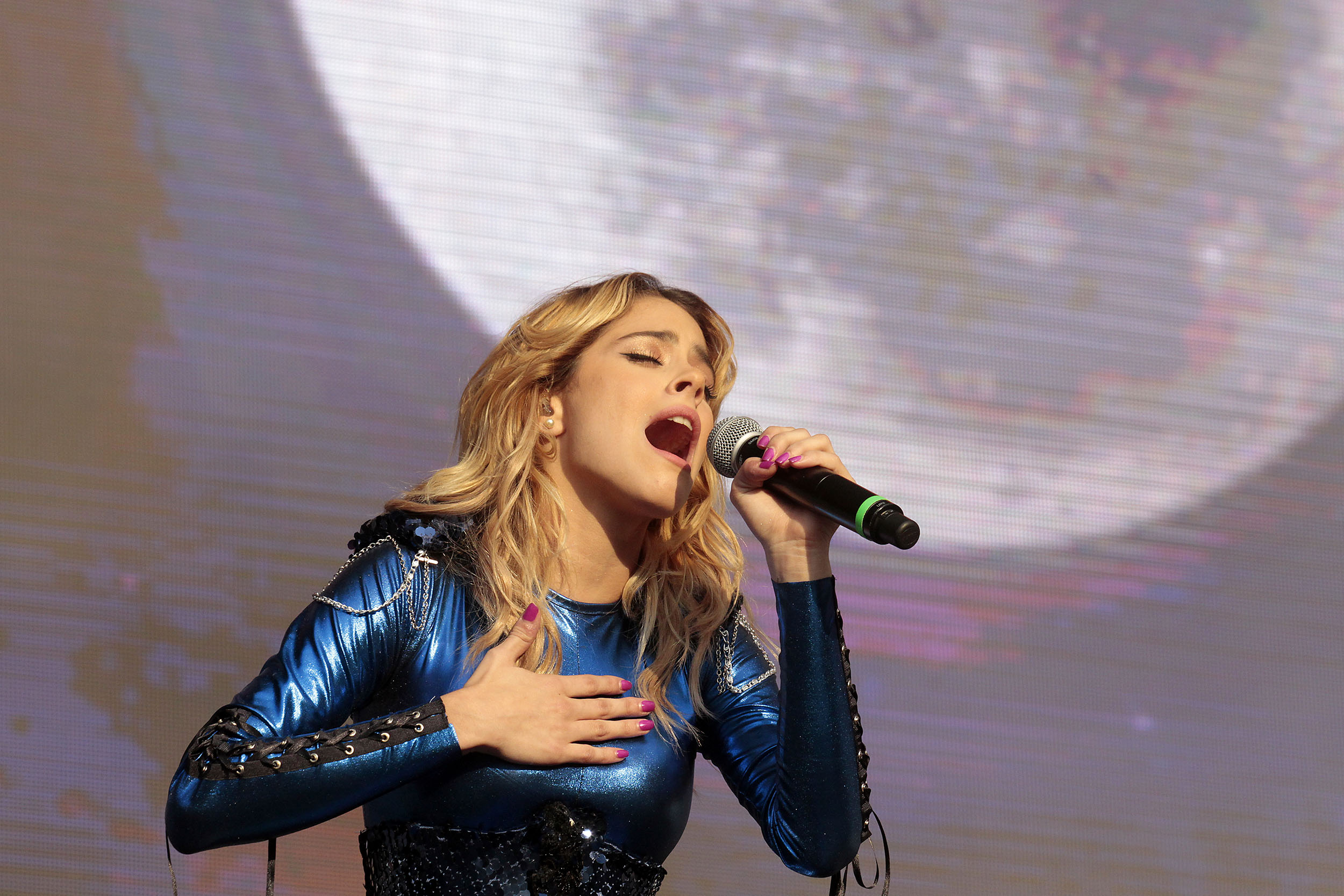
On the evening of October 18, fans who had already lined up outside Miami’s Kaseya Center to see Argentine pop star Tini Stoessel found out their night was over before they got through the doors. Twenty minutes before the scheduled start of her FUTTTURA tour stop, an outdoor screen displayed a short statement: “Due to circumstances unrelated to the artist and Kaseya Center, TINI’s performance tonight has been canceled.” No opening act, no rescheduled set, no partial show – just a screen, outside, telling thousands of people who had already shown up that there would be nothing to see.
This week’s Terrible Tuesday subject isn’t a bad song or a disappointing album. It’s a pattern that keeps repeating across live music’s current touring boom: the actual production fails, and the artist absorbs the public damage for it. Stoessel’s production company, Ake Music, attributed the cancellation to the venue not meeting “previously requested technical and production requirements” and was explicit that the singer herself bore no responsibility. Stoessel went further after the fact, pushing back directly against any read of this as routine: “Esto no fue un simple inconveniente técnico” – this was not a simple technical inconvenience. According to her account, the venue had been handed over hours late, with systems the show needed to safely take the stage still not operational. Sound, lighting, video, and communication infrastructure weren’t functioning, and the safety-critical tests required before any scenic flight elements could be used couldn’t be completed in time. That last detail matters more than it might read at first – a flying rig that hasn’t passed its safety check isn’t a production inconvenience, it’s a hazard, and canceling rather than running the show anyway was, on the specific facts here, the correct call.
What makes this a genuine Terrible Tuesday subject rather than just an unlucky night is how familiar the shape of the failure is. A major pop star sells out an arena; a production and logistics chain several layers removed from the artist herself doesn’t deliver on contractual basics; fans who bought tickets, booked travel, and showed up get a screen instead of a show; refunds get issued after the fact as the only available remedy. Kaseya Center confirmed automatic refunds through the original point of purchase, which is the right outcome and also the bare minimum one – a refund replaces the ticket price. It does not replace the flight, the hotel, the night off work, or the show itself. None of that cost shows up anywhere in the production company’s statement, and none of it is retrievable once the screen goes dark.
There’s also a harder question sitting underneath the immediate facts, one Stoessel’s own fanbase has raised before: this is not the first time a Stoessel show has been scrapped at the last minute, and a pattern of late cancellations – whatever the specific cause each time – starts to look less like a run of bad luck and more like a structural gap in how her touring operation vets a venue before committing a date to it. A single cancellation is a disaster. A second one, even for an unrelated reason, is the start of a trend a column like this exists to name.
Nothing about this reflects on Stoessel’s music, which isn’t under review here – it’s the production chain around it that failed, publicly and expensively, in front of an arena full of people who’d already arrived. That the artist stepped forward afterward to say so herself, rather than letting the vaguer “circumstances unrelated to the artist” language stand as the full story, is the one part of this entire incident that went right.
Hero image: Tini Stoessel performing live. Used under fair use for editorial commentary.