Wack Wednesday: A Calabash Lute, Three Voices, and a Dub Producer in Ramsgate
King Ayisoba plays a homemade two-string lute and sings in three voices, one of them his grandfather's -- and Pure Confusion, cut live in a single afternoon, then handed to an On-U Sound dub producer and a Yardbirds harmonica player.
 By Song Reviews · September 30, 2026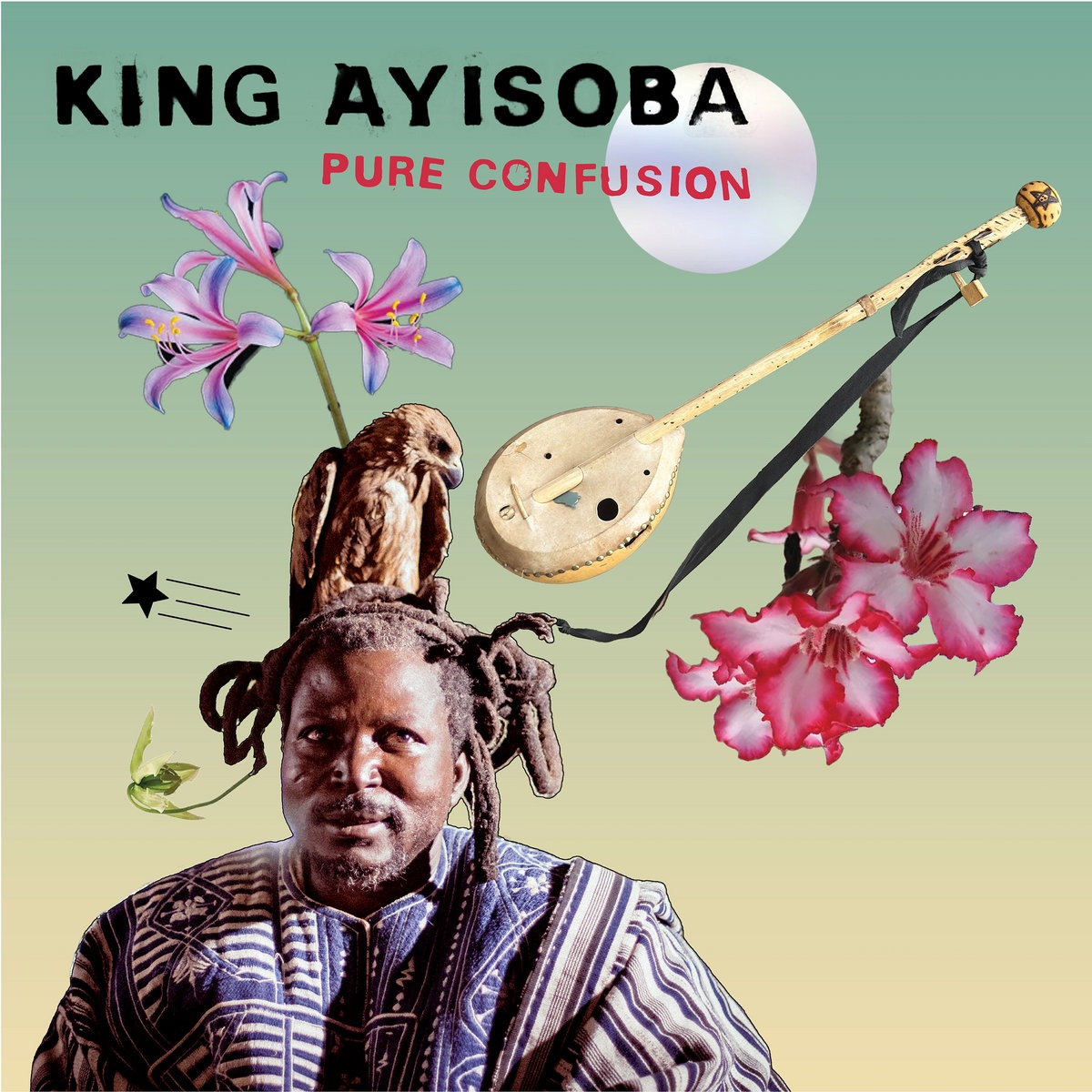
What Wack Wednesday Is
Every Wednesday, Song Reviews covers what’s strange: novelty tracks, bizarre production, genre combinations that shouldn’t work, internet phenomena, and the growing pile of edge cases pop music keeps generating faster than anyone can classify them. It’s not automatically a bad-music day – that’s Terrible Tuesday’s job. Wack Wednesday is for the songs and stories that are just weird, whether or not they’re any good.
What We’re Talking About Today
Most of this month’s weird-music stories came from the internet. This one came from a studio in Ramsgate, England. King Ayisoba, the Ghanaian kologo player born in Bolgatanga in 1974, released his seventh album, Pure Confusion, on September 4, 2026, and The Quietus named it one of the best albums of September in its Music of the Month roundup on September 25, describing a record built on a two-string calabash lute captured live in one afternoon, then augmented with dub processing and extra instrumentation.
The kologo is a homemade two-string lute made from a calabash and covered in goatskin. Ayisoba flew to England in late 2024 and, as he tells it in the album’s press notes, “All the songs were already in my head. This album is all recorded live, over one afternoon.” The producer on the other side of the desk was Adrian Sherwood, founder of On-U Sound, a British producer whose career has connected dub, post-punk, industrial, hip-hop, and experimental music through collaborations with Lee “Scratch” Perry, Mark Stewart, Horace Andy, Sinéad O’Connor, Nine Inch Nails, and Depeche Mode.
We reviewed the opening track, “Property” – a song about land sold to several buyers at once, and the clearest window into how the record works.
What’s Wack
- The lead instrument is built by hand. The kologo is a calabash body, goatskin covering, and two strings. Per The Quietus, Ayisoba plays it “as rhythm and melody at once” – one two-string instrument doing the work of a rhythm section and a lead line at the same time.
- One man, three voices. Ayisoba sings in three distinct voices, and says one of them belongs to his grandfather, a spiritual healer whose spirit he says still guides him. Sherwood, quoted in the press notes, says that “when you’re listening you think it’s three different people.”
- The performance came first; everything else is a guest. The Quietus reports the record was cut in one afternoon in November 2024, with the kologo captured first and the bass, cello, saxophone, harmonica, and dub processing on the desk added later. Sherwood’s own description is that they “recorded it completely live, did some programming and processing on some tracks, using dub techniques live on the mixing desk.”
- The guest list is not one you would predict. Bassist Doug Wimbish flew in from America; Ivan Hussey plays bass, keyboards, and cello, an instrument Sherwood notes “is not really featured on African recordings,” which is why he wanted to try it; Alex White of Fat White Family plays saxophone; and Alan Glenn, who played in the Yardbirds, plays harmonica. Mark Bandola adds synth and Matthew Smyth drum programming.
- A dub producer treating a folk instrument like a mixing-desk source. The Quietus argues the pairing works because “Sherwood’s dub instincts suit the kologo’s repetition. Delay and space are what this instrument has always wanted.”
- Critics have reached for odd comparisons. The album’s Bandcamp page quotes Songlines calling Ayisoba “an unholy mix of Tom Waits and Busta Rhymes,” and, on the same page, The Guardian describing “thrilling and insistent harsh-edged vocals.”
None of it is a gimmick. The songs are about land disputes, illness hidden out of shame, and the forefathers, and the strangeness is a byproduct of taking a real tradition and a real producer seriously at the same time. That is a different kind of wack than an AI polar bear – and, as The Quietus also notes, not a perfect one: some of the overdubs edge toward the decoration Ayisoba does not need.
Hero image: “Pure Confusion” album cover art, Mais Um. Used under fair use for editorial commentary.