Amazing Grace
Where Judy Collins made 'Amazing Grace' smaller to get it out of the church, Aretha Franklin went the other way — stretching the hymn to nearly eleven minutes in front of a Los Angeles congregation and turning it into the definitive gospel reading of the song.
 By Song Reviews · August 23, 2026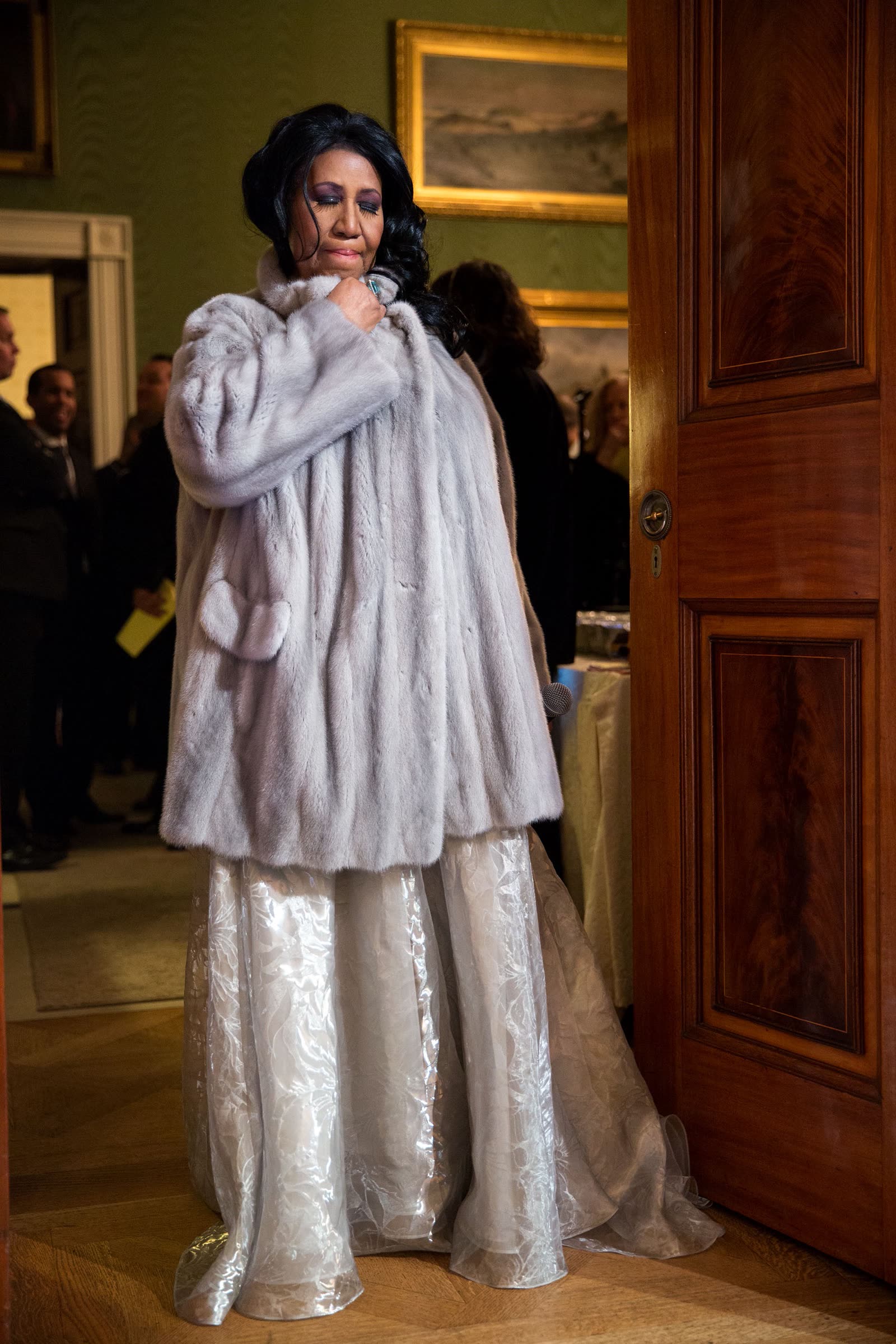
Where Judy Collins made 'Amazing Grace' smaller to get it out of the church, Aretha Franklin went the other way — stretching the hymn to nearly eleven minutes in front of a Los Angeles congregation and turning it into the definitive gospel reading of the song.
Two nights, January 13 and 14, 1972, at New Temple Missionary Baptist Church in Los Angeles: Aretha Franklin, at the commercial peak of her secular career, went back to the church she grew up in and recorded a gospel album live, backed by Reverend James Cleveland and the Southern California Community Choir. Producer Jerry Wexler had reportedly been pushing her toward exactly this for years. The resulting “Amazing Grace” is not a song in any conventional sense — it’s a 10:45 performance that treats the hymn’s four familiar verses as a starting point rather than the whole structure, building through call-and-response with Cleveland, choir vamps, and an escalating intensity that has nothing to do with the plain melody most listeners know. It is the maximalist answer to Judy Collins’ minimalist one, recorded less than two years apart, and there’s no meaningful sense in which either approach is the “correct” way to perform this hymn — they’re both right, aimed at completely different things.
The album version isn’t a studio fabrication smoothed over afterward; it’s a document of a specific room on a specific night, with a specific congregation reacting in real time, including Franklin’s hero Clara Ward reportedly in the pews. That’s the whole case for it: the performance takes as long as it takes because the room needed it to, not because a producer decided a ten-minute track was commercially viable. Wexler and Arif Mardin produced, Franklin herself is credited with the arrangements, and the backing band — Cornell Dupree on guitar, Chuck Rainey on bass, Bernard Purdie on drums — plays with the kind of restraint that lets Franklin and the choir carry the actual weight of the performance.
The commercial outcome says something rare happened: Amazing Grace went double platinum, sold more than two million copies in the US, and remains the best-selling live gospel album ever made — a genre that essentially never crosses over at that scale, doing exactly that in the middle of Franklin’s pop and R&B prime. It won the 1973 Grammy for Best Soul Gospel Performance and lands at No. 154 on Rolling Stone’s 2020 list of the 500 Greatest Albums of All Time. The performance film has its own strange history worth noting honestly: director Sydney Pollack shot it but never finished it — no clapperboards, so nothing synced — and the footage sat unfinished in a vault for close to four decades until producer Alan Elliott completed it after Pollack’s 2008 death. Franklin sued to block its release in 2015 over control of her own image, and won that fight; the film finally premiered in November 2018, three months after she died.
Critics mostly agree this is Franklin at her absolute peak — AllMusic’s Ron Wynn called it “possibly Franklin’s greatest release ever,” and Rolling Stone’s Jon Landau praised its “virtuoso display of gospel pyrotechnics” — though not unanimously: Robert Christgau found the more subdued stretches read as “aimlessness” rather than inspiration, and that’s a fair note on a performance this long and this loose in structure. The album asks for patience a three-minute single never has to, and there are passages built more for the room that was there than for a listener replaying it decades later on a phone.
9.2/10 — the hymn taken to its most expansive possible extreme, by someone with the range and the room full of believers to actually earn it.
Hero image: Aretha Franklin backstage before her performance at “The Gospel Tradition: In Performance at the White House,” April 14, 2015, by Pete Souza, Chief Official White House Photographer — public domain (PD-USGov-POTUS).