Carry Me
Anne Wilson's most personal song to date is a plea for help bearing a weight she never agreed to carry -- her own childhood, surrendered at 15 after her brother's death launched a career she didn't ask for.
 By Song Reviews · November 1, 2026
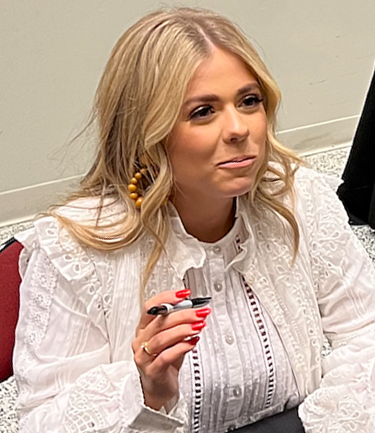
Anne Wilson's most personal song to date is a plea for help bearing a weight she never agreed to carry -- her own childhood, surrendered at 15 after her brother's death launched a career she didn't ask for.
Anne Wilson’s career began under circumstances no 15-year-old chooses: her brother’s death became the occasion for the song and the public platform that launched her into Christian music, and the adult responsibilities of a recording career arrived before she’d finished being a teenager. “Carry Me,” from her October 2025 album Stars, is the clearest she’s been on record about what that trade actually cost – a song about burnout from constant emotional strength-keeping, suppressed grief that never got processed on its own timeline, and a specific, named exhaustion from being the person other people depend on without anyone checking whether she had the capacity for it.
Wilson has called it one of the most personal songs she’s written, and the record bears that out structurally: rather than resolving quickly into triumphant certainty, the way a lot of contemporary Christian radio singles do, “Carry Me” sits in the weight for most of its runtime before turning the title phrase into a genuine plea rather than an answered prayer. That patience is the song’s real strength – it treats exhaustion as something worth describing accurately rather than something to rush past on the way to an uplifting chorus.
Set against this week’s hymn, “For All the Saints,” the pairing is a useful one: How’s text imagines the saints as already-triumphant, their labors finished, their rest secured – “who from their labors rest.” Wilson’s song is the view from inside labor that hasn’t ended yet, from someone who became responsible for other people’s wellbeing before she’d had the chance to be a child, asking to be carried rather than claiming she already has the strength to keep going alone. It’s less a direct theological statement than a lived, specific answer to the hymn’s distant promise – sainthood, from the inside, still very much in progress.
7.8/10 – a genuinely vulnerable, well-structured song that earns its request for help by being honest about how much weight it’s actually describing.
Hero image: Anne Wilson, Prudential Center, New Jersey, 2022, dedicated to the public domain (CC0) by CallieCrewmanAuthor.