Come Thou Fount of Every Blessing
The Tabernacle Choir's Mack Wilberg arrangement is the reason this 1758 hymn returned to the choir's own church hymnal -- a big, carefully built reading that turns a first-person confession into something a congregation-sized choir can sing as 'we.'
 By Song Reviews · October 4, 2026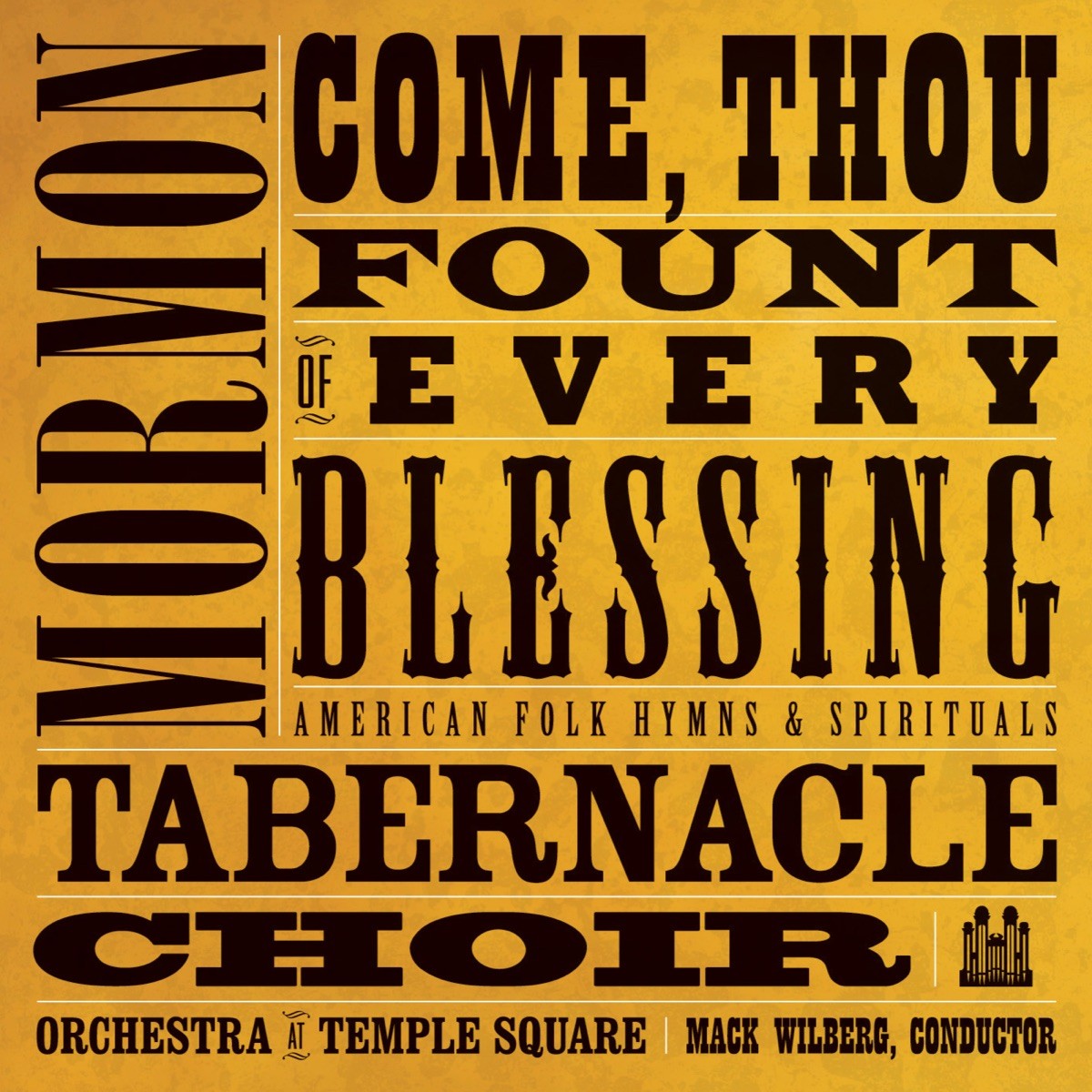
The Tabernacle Choir's Mack Wilberg arrangement is the reason this 1758 hymn returned to the choir's own church hymnal -- a big, carefully built reading that turns a first-person confession into something a congregation-sized choir can sing as 'we.'
Robert Robinson wrote “Come, Thou Fount of Every Blessing” in the late 1750s, when he was in his early twenties and a young preacher in England; it was published in 1758. The lyric is built on 1 Samuel 7:12 – “Ebenezer” means “stone of help” – and its best-known line is a self-diagnosis: “Prone to wander, Lord, I feel it.” A story has traveled with that line for generations: that Robinson later did wander, and that a woman in a stagecoach sang the hymn to him and he told her he would give a thousand worlds to feel again what he felt when he wrote it. The telling usually cited is Samuel Woolcock Christophers’ Hymn-writers and Their Hymns in 1870, some eighty years after Robinson’s death in 1790, and Christianity.com calls it “widely-told but unverifiable.” It may be true. It has not been shown to be.
The Tabernacle Choir’s version is where a lot of listeners meet the hymn. Mack Wilberg’s arrangement first appeared on a 1993 BYU album, A Thanksgiving of American Folk Hymns, and the choir recorded it for its 2009 album Come, Thou Fount of Every Blessing: American Folk Hymns & Spirituals, produced by Wilberg, which reached No. 1 on Billboard’s Top Classical Crossover Albums chart. The choir’s own church tells the story of its influence: the hymn appeared in Emma Smith’s 1841 hymnal and returned in the church’s 1948 hymnal, was dropped from the 1985 collection for infrequent use, and came back into Hymns – For Home and Church on the strength of Wilberg’s arrangement. Wilberg also rebuilds the text – splitting the second verse into two parts and attaching the back half of the third to each.
That is an arranger’s decision, and it tells you what this recording is for. Robinson’s words are a private confession; a choir this size makes them a public one, and the effect is closer to a set piece than a prayer. The craft is high, and the recording earns its size. What it gives up is the “I” in “I feel it.”
8.3/10 – a showcase arrangement that revived a hymn its own church had let go, at the cost of some of the text’s private ache.
Hero image: “Come, Thou Fount of Every Blessing: American Folk Hymns & Spirituals” album artwork, The Tabernacle Choir at Temple Square. Used under fair use for editorial commentary.