For All the Saints (Indelible Grace)
Indelible Grace's entire mission is writing new melodies for old hymn texts -- and their 2003 setting of 'For All the Saints' does something close to heresy by hymn-nerd standards: it discards Ralph Vaughan Williams' famous Sine Nomine tune entirely.
 By Song Reviews · November 1, 2026
Indelible Grace's entire mission is writing new melodies for old hymn texts -- and their 2003 setting of 'For All the Saints' does something close to heresy by hymn-nerd standards: it discards Ralph Vaughan Williams' famous Sine Nomine tune entirely.
Indelible Grace grew out of Reformed University Fellowship campus ministry at Belmont University, organized around a specific, almost provocative premise for a hymn-revival project: rather than simply performing old texts in contemporary arrangements, the collective – built around songwriters including Sandra McCracken, Derek Webb, and Andrew Osenga, under RUF minister Kevin Twit – writes entirely new melodies for hymn lyrics the church has mostly stopped singing. “For All the Saints,” arranged by Christopher Miner and copyrighted in 1997, is a direct application of that premise to one of the most recognizable hymn tunes ever written, and it’s worth being clear about what that choice actually risks: Ralph Vaughan Williams’ 1906 “Sine Nomine” setting is not an interchangeable vehicle for William Walsham How’s text. It’s arguably the reason the text is still sung at all, a tune so closely identified with these specific words that replacing it is close to rewriting the hymn from the ground up.
Miner’s melody, released on 2003’s For All the Saints: Indelible Grace III, doesn’t try to compete with Sine Nomine’s scale – it goes the opposite direction, built for a single voice and acoustic guitar rather than a full choir and organ, closer to a folk hymn than a processional. That’s a defensible artistic logic: Indelible Grace’s whole audience is college students and campus ministries without pipe organs or trained choirs, and a melody built for one guitar is simply more usable in that setting than Vaughan Williams’ arrangement will ever be. Heard on its own terms, stripped of the comparison, it’s a pleasant, functional folk-hymn melody that serves the text without embarrassing it.
Heard next to Sine Nomine, though, it can’t help but sound smaller – a side door built next to a cathedral entrance. The text’s “great cloud of witnesses” imagery wants scale, a sense of an enormous, ongoing procession, and a single guitar can gesture at intimacy but not at that. This is less a flaw in Miner’s craft than a structural fact about replacing one of the 20th century’s most purpose-built hymn tunes: almost nothing else was going to sound as big, because almost nothing else was written with that specific goal in mind.
7.2/10 – a sincere, well-crafted folk alternative that makes its case for accessibility honestly, even while losing most of the original tune’s architectural weight.
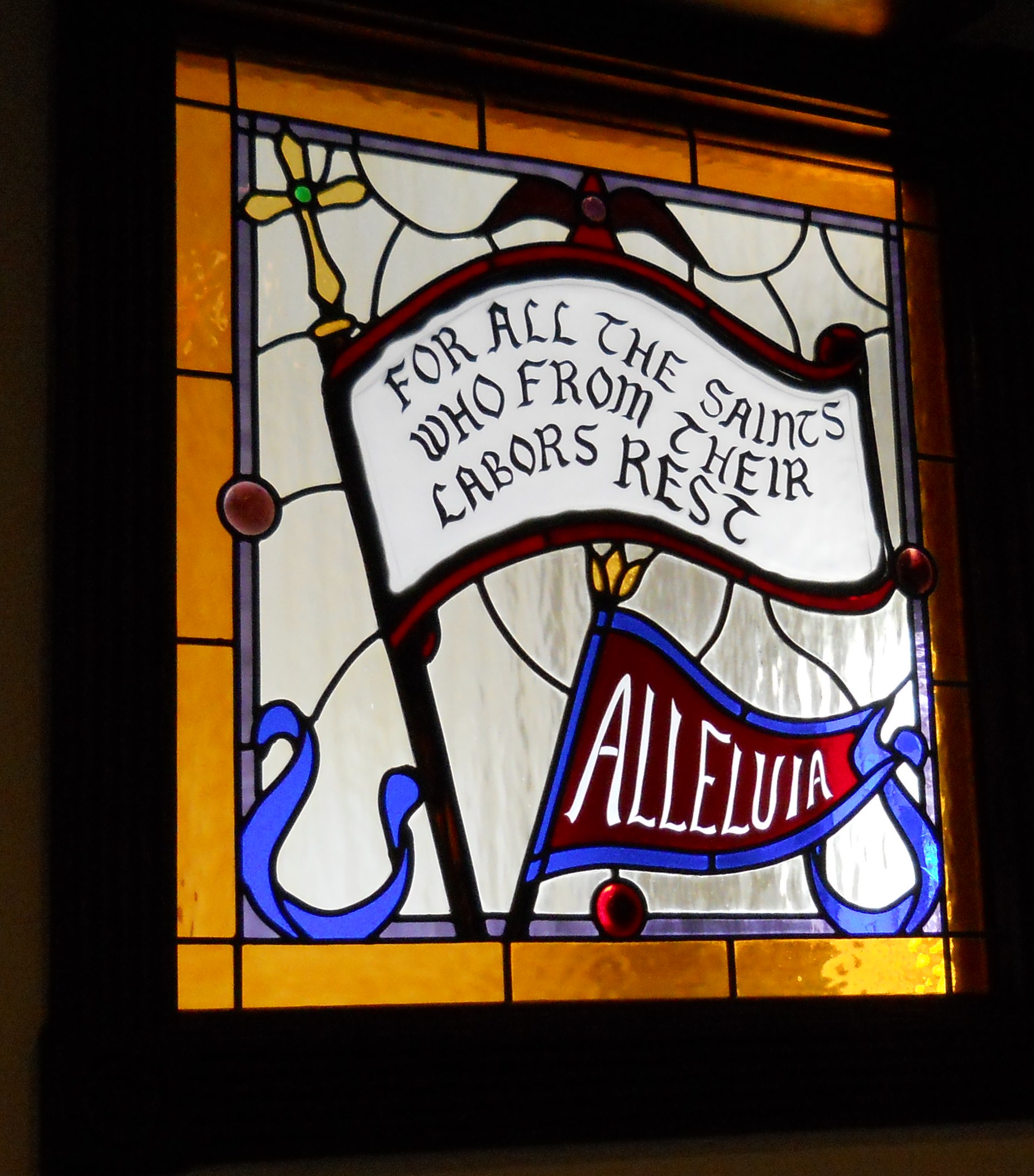
Hero image: “For All the Saints” stained glass window, All Saints Episcopal Church, Jensen Beach, Florida, by Stephen B Calvert, licensed under CC BY-SA 3.0.