For All the Saints (Wells Cathedral Choir)
Wells Cathedral Choir's 1999 recording is the hymn in its most famous and durable setting: Ralph Vaughan Williams' 1906 tune Sine Nomine, composed specifically to anchor All Saints' Day and still doing exactly that job 120 years later.
 By Song Reviews · November 1, 2026
Wells Cathedral Choir's 1999 recording is the hymn in its most famous and durable setting: Ralph Vaughan Williams' 1906 tune Sine Nomine, composed specifically to anchor All Saints' Day and still doing exactly that job 120 years later.
William Walsham How’s text for “For All the Saints” dates to 1864, published in a collection explicitly built for saints’ days, drawing its central image from Hebrews 12’s “great cloud of witnesses” – the dead faithful, pictured as an unbroken procession the living church still belongs to. For four decades the text circulated to a serviceable but unremarkable tune called “Sarum.” Then, in 1906, Ralph Vaughan Williams wrote a new setting for The English Hymnal and named it “Sine Nomine” – Latin for “without a name” – specifically because of its intended use on All Saints’ Day, November 1. That tune, not How’s text alone, is why the hymn has the stature it does: a wide, processional melody built to be sung by an entire congregation in unison before breaking into four-part harmony, music confident enough to carry the text’s weight rather than simply accompanying it.
Wells Cathedral Choir’s 1999 recording, released on Hyperion as part of Malcolm Archer’s The English Hymn series surveying great 20th-century hymn tunes, is Sine Nomine in its most natural habitat: a large English cathedral choir and organ, recorded by Archer with organist Rupert Gough, treating the tune exactly the way it was designed to be sung. The verses alternate between an open, unison first pass and a fuller harmonized return, the structure Vaughan Williams built into the music itself, and the choir’s clean, unforced delivery lets that structure do the work rather than editorializing on top of it.
There is nothing experimental here, and that’s precisely the point of including it: this is the reference recording, the version against which every other setting of this text – including the two reviewed alongside it this week – is implicitly measured. A tune written to anchor one specific day on the church calendar, performed by the kind of choir it was written for, in the kind of building it was written for.
8.3/10 – the hymn in its original, purpose-built setting, performed with exactly the plain confidence the music was composed to reward.
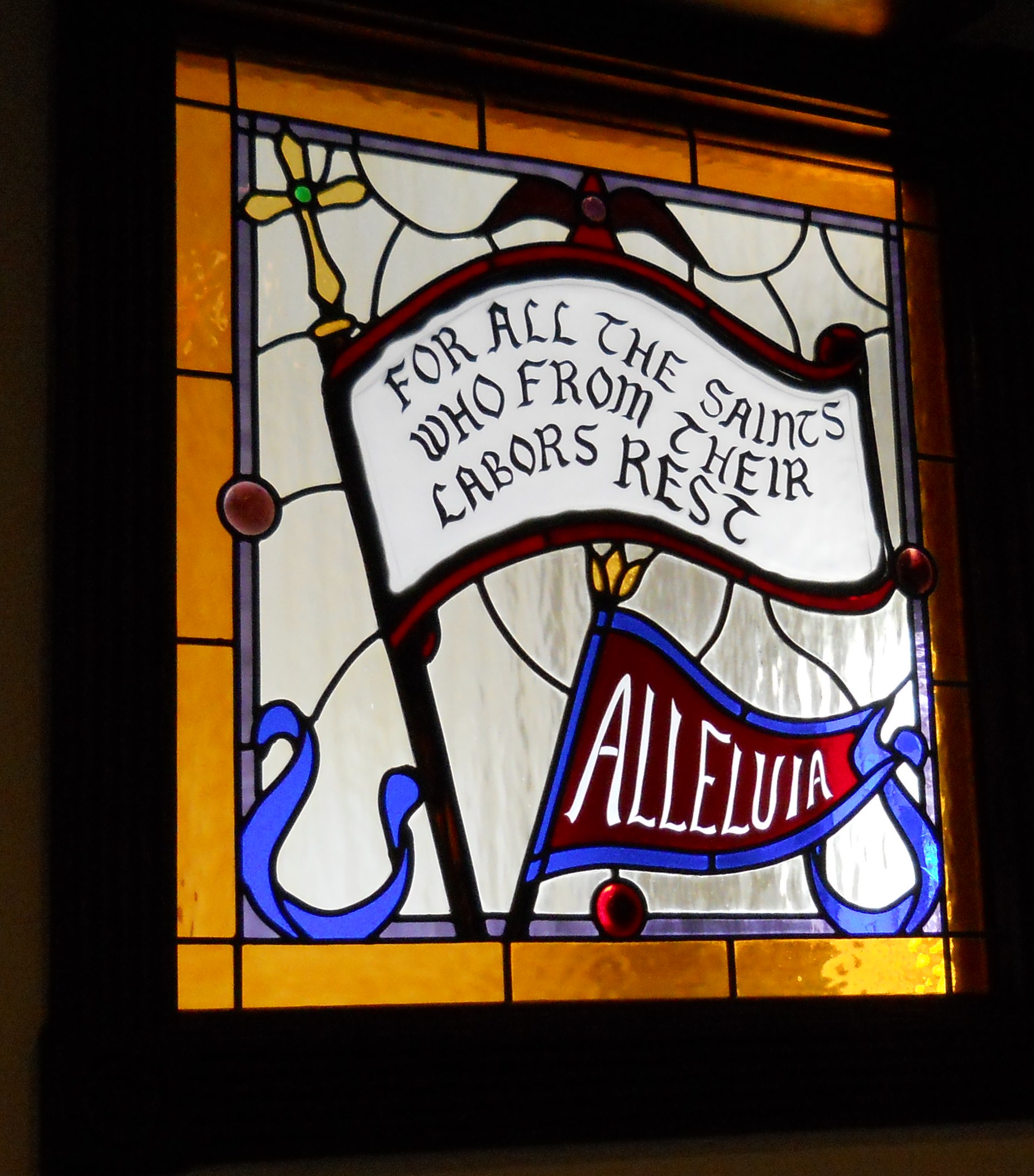
Hero image: “For All the Saints” stained glass window, All Saints Episcopal Church, Jensen Beach, Florida, by Stephen B Calvert, licensed under CC BY-SA 3.0.