Good Vibrations
Brian Wilson called it a 'pocket symphony,' assembled it in pieces across four studios over months, and turned in the most expensive single of 1966 -- 60 years old this year and still an architecture lesson.
 By Song Reviews · September 3, 2026
 Greatest of All Time!
Brian Wilson called it a 'pocket symphony,' assembled it in pieces across four studios over months, and turned in the most expensive single of 1966 -- 60 years old this year and still an architecture lesson.
Brian Wilson didn’t record “Good Vibrations” the way a band records a single. Across the second half of 1966, he tracked modular sections of the song at four different Los Angeles studios – Gold Star, Western, Sunset Sound, Columbia – with session players from the Wrecking Crew, then spent weeks physically editing the best takes of each section together into a finished arrangement, an approach to pop production that had essentially no precedent at the time. The result reportedly cost somewhere between $50,000 and $75,000 to make, an outlandish figure for a single in 1966, and it shows in the finished record: cello played with a rock rhythm, a jaw harp, and the eerie wail of Paul Tanner’s electro-theremin standing in for a hook no conventional instrument could quite produce.
None of that would matter if the song didn’t also work as a song – three-plus minutes that move through distinct sections (verse, that theremin-carried chorus, a bridge that drops the tempo and mood entirely before building back) without ever losing the melodic thread Wilson and Mike Love wrote underneath all the studio experimentation. It hit No. 1 in both the US and UK, the group’s first chart-topper in either country, proof that the “pocket symphony” Wilson said he was chasing could still function as a three-minute pop single on Top 40 radio.
Greatest of All Time! – the record that proved a recording studio could be the instrument, not just the place where instruments get recorded.
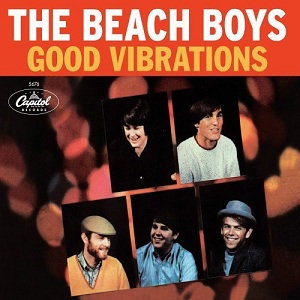
Hero image: “Good Vibrations” U.S. single picture sleeve, 1966, Capitol Records. Used under fair use for editorial commentary.