Me and Bobby McGee
Kris Kristofferson wrote it, Roger Miller charted with it first, and Janis Joplin recorded the definitive version days before her death -- becoming her only No. 1 on a song she never lived to see released.
 By Song Reviews · November 19, 2026
 Greatest of All Time!
Kris Kristofferson wrote it, Roger Miller charted with it first, and Janis Joplin recorded the definitive version days before her death -- becoming her only No. 1 on a song she never lived to see released.
Kris Kristofferson wrote “Me and Bobby McGee” with Fred Foster, who supplied the title – a mangled version of the name of a secretary at Foster’s publishing company, “Bobby McKee,” that Kristofferson built an entire road-trip narrative around without ever meeting the actual person. Roger Miller recorded the first released version in 1969, a competent, radio-friendly take that charted modestly on the country charts and would have been the song’s commercial ceiling if it had stopped there.
Janis Joplin heard the song from Kristofferson himself – the two were briefly involved – and recorded her version for what became the posthumous album Pearl on October 1, 1970, three days before she died of a heroin overdose. Her reading strips away Miller’s country politeness entirely: Joplin’s vocal starts conversational and builds across the song’s length into something closer to a shout, cracking and straining against the melody in a way that turns a wistful road song into something closer to grief, whether or not that reading was intentional at the time of recording. The arrangement stays sparse enough – mostly acoustic guitar and a loose backing band – to keep her voice as the only thing the listener can actually focus on.
Released as a single in January 1971, four months after Joplin’s death, it became her only No. 1 single on the Hot 100 – a chart achievement she never lived to see, on a song written by someone else, about a person who didn’t exist, inspired by a name that wasn’t even right. The posthumous timing invites a kind of mythologizing the recording doesn’t actually need; strip away the context and it’s still one of the most unguarded vocal performances of the era, a singer who sounds like she’s discovering the song’s loss in real time rather than performing a studied interpretation of someone else’s lyric.
Greatest of All Time. A song built from a secretary’s misremembered name became a chart-topping eulogy nobody, including its own singer, could have planned.
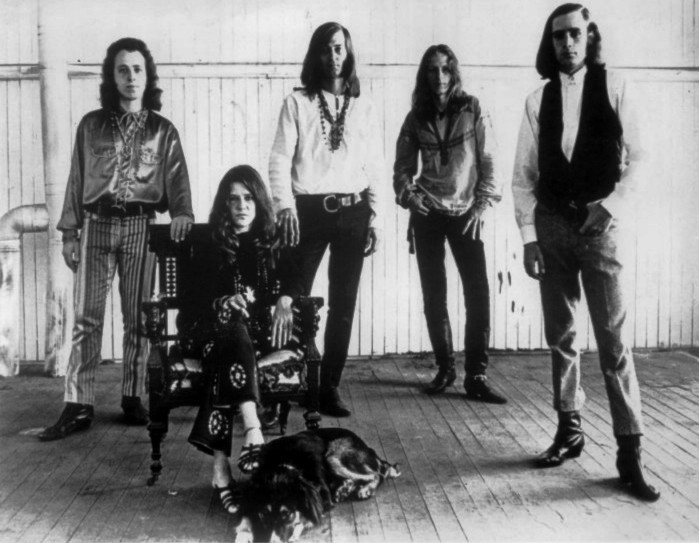
Hero image: Janis Joplin with Big Brother and the Holding Company, 1960s publicity photo. Public domain.