Mr. Tambourine Man
The Byrds took a deep cut off Bob Dylan's forthcoming album, bolted a 12-string Rickenbacker jangle onto it, and invented folk-rock's commercial template in the time it took to reach No. 1.
 By Song Reviews · November 19, 2026
 Greatest of All Time!
The Byrds took a deep cut off Bob Dylan's forthcoming album, bolted a 12-string Rickenbacker jangle onto it, and invented folk-rock's commercial template in the time it took to reach No. 1.
Bob Dylan wrote “Mr. Tambourine Man” in 1964 and released his own recording of it on Bringing It All Back Home in March 1965 – a sprawling, loose acoustic performance, Dylan’s voice and harmonica carrying most of the weight across more than five minutes. It’s a strong song on that record, but one among many, filed next to “Subterranean Homesick Blues” and “It’s All Over Now, Baby Blue” rather than singled out as the obvious hit.
The Byrds heard something else in it. Roger McGuinn’s arrangement, built around a chiming Rickenbacker 12-string run through a compressor until it rang like a bell, cut the song down to under two and a half minutes, trimmed Dylan’s verses, and added the vocal harmonies of McGuinn, Gene Clark, and David Crosby stacked on top of each other. The result barely resembles a folk record at all – it’s electric, radio-ready, and built for a jukebox rather than a coffeehouse, which is exactly the hybrid that earned the genre its name. Released in April 1965, it reached No. 1 on the Hot 100 that June, becoming the first folk-rock song to top the American singles chart and doing it before Dylan’s own version had even become a point of comparison for most listeners.
What makes the record still worth hearing six decades later isn’t just the historical footnote – it’s that the arrangement choices still sound inevitable. The 12-string tone became folk-rock’s signature instrument almost entirely because of this one single; strip away everything that followed and the Byrds’ “Mr. Tambourine Man” still sounds like a band discovering, in real time, that a Dylan deep cut could be a hit single if someone just turned up the right guitar.
Greatest of All Time. A song Dylan buried on side one of an album became a genre-defining No. 1 the moment someone else heard a pop single where he’d heard an album track.
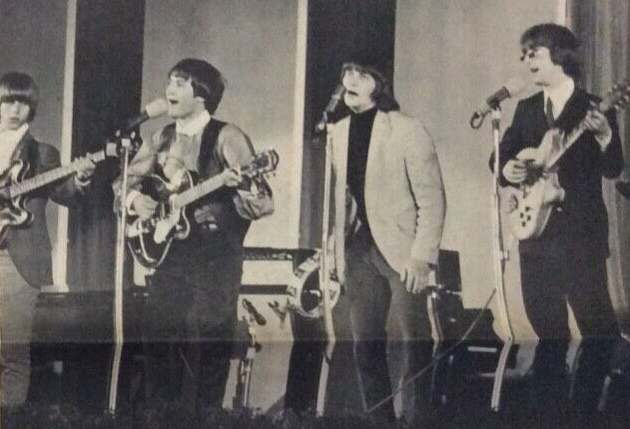
Hero image: The Byrds performing at the Hollywood Bowl, July 3, 1965. Public domain.