Once in a Lifetime
Talking Heads and Brian Eno threw out the idea of writing a song first and recording it second -- building 'Once in a Lifetime' from a looped jam upward instead, with David Byrne's preacher cadence added only after the track already existed.
 By Song Reviews · November 5, 2026
 Greatest of All Time!
Talking Heads and Brian Eno threw out the idea of writing a song first and recording it second -- building 'Once in a Lifetime' from a looped jam upward instead, with David Byrne's preacher cadence added only after the track already existed.
By 1980’s Remain in Light, Talking Heads and producer Brian Eno had abandoned the normal order of songwriting entirely. Rather than writing a song and then recording it, the band jammed in the studio, isolated whatever sounded best, and looped it until it became a track – a method closer to how a lot of hip hop would later get built than to how a rock band in 1980 was supposed to work. “Once in a Lifetime” is the clearest result of that process: a one-chord rhythm bed, built additively until drum and synthesizer became indistinguishable from each other, with David Byrne’s lyrics and vocal added only after the music already existed as a finished, looping groove.
What Byrne layered on top of that groove is the part most listeners remember first – a preacher’s cadence, repeating “same as it ever was” like a congregation’s response, turning a song about the terrifying sameness of adult routine into something that sounds, structurally, like a sermon. That vocal approach wasn’t a separate creative decision bolted onto an existing arrangement; it’s a direct response to the music’s own repetitive, hypnotic structure, which is why the word-for-word repetition that would read as lazy songwriting anywhere else here reads as the entire argument of the song.
The method mattered as much as the result. Building a song from an improvised loop upward, rather than from a verse-chorus structure downward, let “Once in a Lifetime” sound like nothing else on rock radio in 1980 – indebted to Afrobeat’s polyrhythms and to the same sample-and-repeat logic hip hop was developing in New York at almost exactly the same moment, even though neither genre was talking to the other yet.
Greatest of All Time. Built backward from a looped jam rather than forward from a song, and it sounds, four and a half decades later, like it was always going to end up that way.
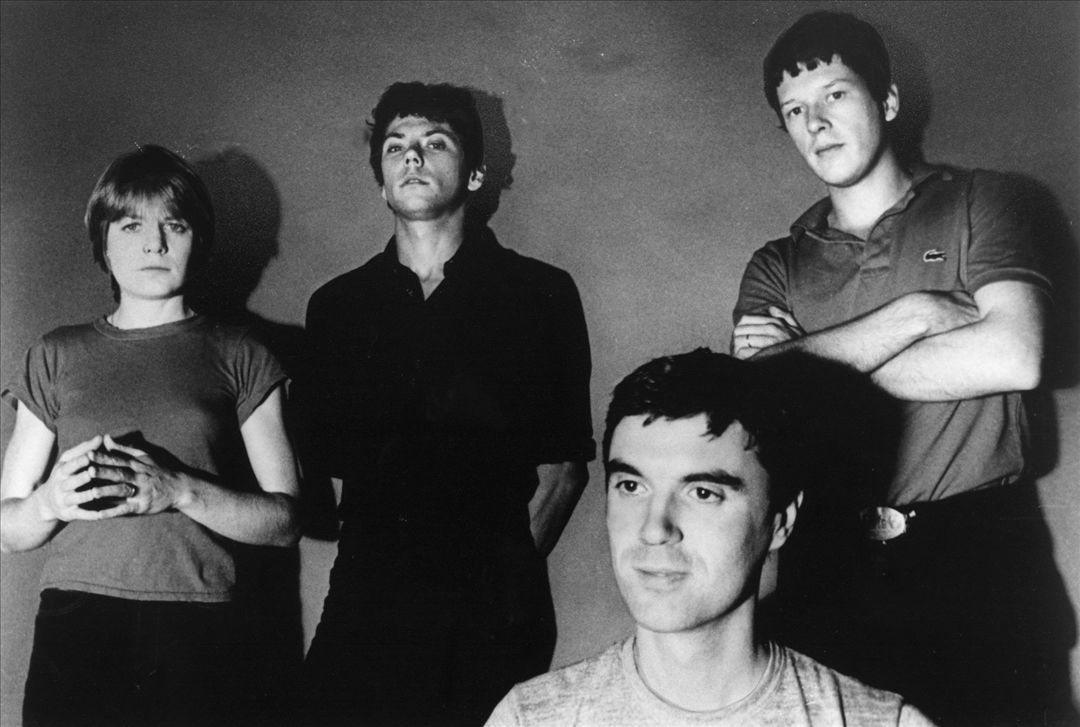
Hero image: Talking Heads, press photo. Used under fair use for editorial commentary.