Red Right Hand
Nick Cave wrote 'Red Right Hand' independently of the Scream franchise and years before Peaky Blinders existed. Decades of film and TV sync licensing turned it into the single most recognized thing he's ever written anyway.
 By Song Reviews · October 29, 2026
 Greatest of All Time!
Nick Cave wrote 'Red Right Hand' independently of the Scream franchise and years before Peaky Blinders existed. Decades of film and TV sync licensing turned it into the single most recognized thing he's ever written anyway.
Nick Cave pulled the title “Red Right Hand” directly from John Milton’s Paradise Lost, where the phrase describes the punishing hand of an angry God – divine vengeance rendered as a physical threat. Cave built the Bad Seeds’ 1994 recording, from the album Let Love In, around that same enticing-and-sinister figure: a shadowy, all-seeing man who moves through town doing favors nobody asked for, over a slow, bell-tolling arrangement that plays more like a horror-film cue than a conventional rock single. It was never a hit in any commercial sense on release.
What it became instead is almost entirely a function of other people’s films and television shows. Scream arrived two years later, in 1996, written and produced with no connection to Cave’s song, and the two have been nearly impossible to separate in the public imagination ever since – “Red Right Hand” supplied mood and menace to a horror franchise it had no hand in making. Decades later, the BBC and Netflix drama Peaky Blinders adopted it as a recurring theme, introducing the song to an entirely new generation that associates it with 1920s Birmingham gangsters rather than with Cave’s own catalog, Paradise Lost, or the film it’s most commonly linked to. The song has since been covered by artists as varied as Iggy Pop, Jarvis Cocker, and Snoop Dogg, frequently with the Peaky Blinders association specifically in mind.
That makes “Red Right Hand” a genuine anomaly in Cave’s body of work: not his biggest chart single, not even originally intended as a standalone statement, but almost certainly the single most recognized thing he has ever recorded – recognized for reasons that have almost nothing to do with the record itself and everything to do with two separate pieces of screen media that found it, decades apart, and decided it already sounded like what they needed.
Greatest of All Time. A song two unrelated screen franchises both adopted as their own atmosphere, independently, decades after it was written for neither.
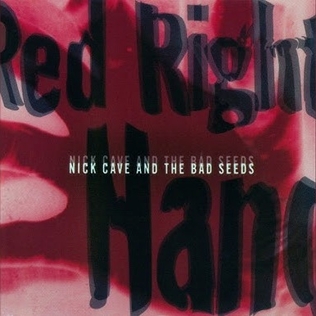
Hero image: “Red Right Hand” single cover art, Mute Records. Used under fair use for editorial commentary.