The Old Rugged Cross
Mahalia Jackson's reading of George Bennard's 1912 hymn turns a simple, repetitive melody into a vehicle for the biggest voice in American gospel music -- restrained exactly as much as the song demands, and no more.
 By Song Reviews · November 8, 2026
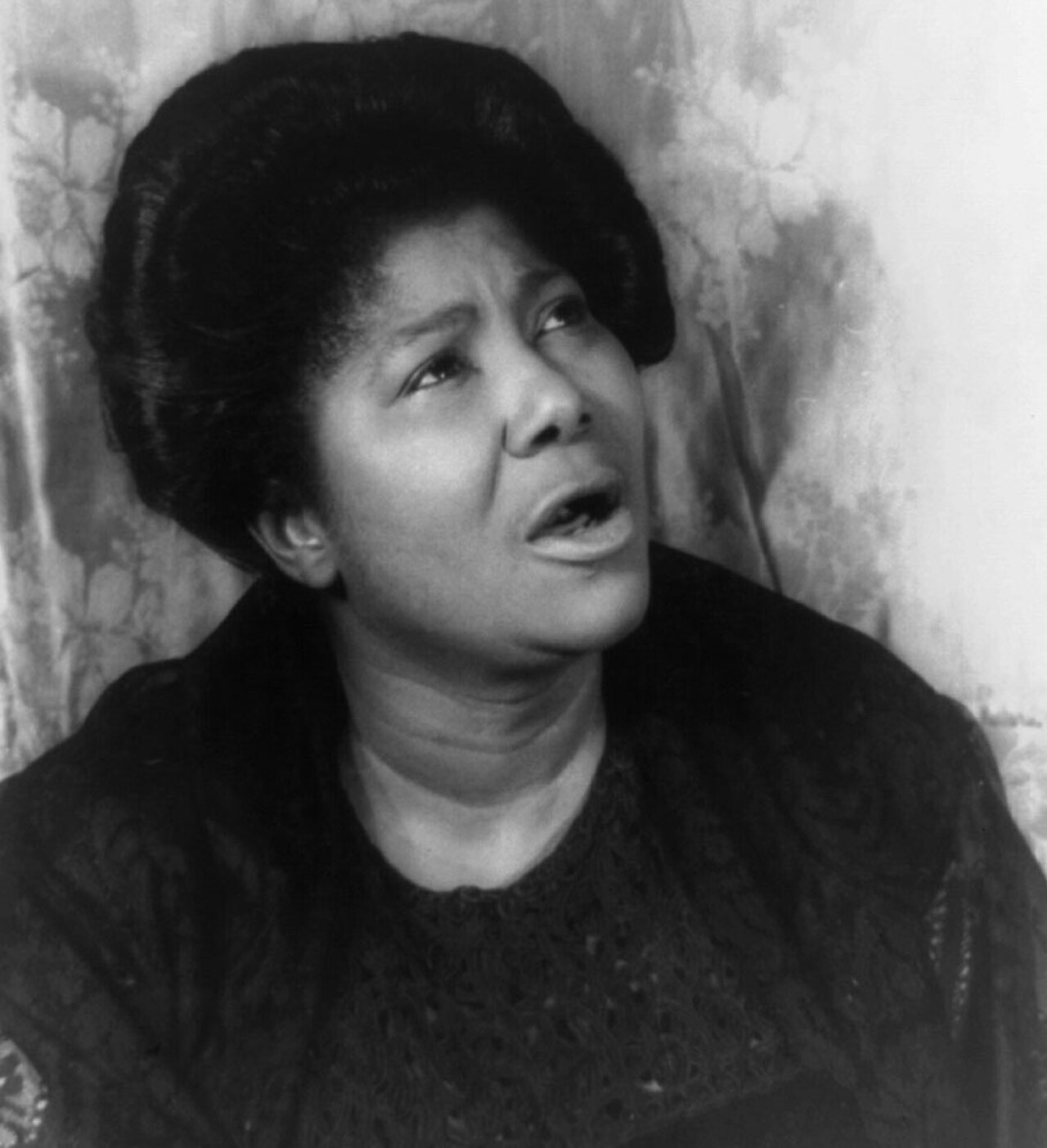
Mahalia Jackson's reading of George Bennard's 1912 hymn turns a simple, repetitive melody into a vehicle for the biggest voice in American gospel music -- restrained exactly as much as the song demands, and no more.
George Bennard wrote “The Old Rugged Cross” in 1912 as a simple, almost folk-plain hymn – a four-verse meditation on the crucifixion built around one of gospel music’s most deliberately unadorned melodies, designed to be sung by an untrained congregation as easily as by a soloist. Mahalia Jackson’s recording, gathered on her 1966 album Garden of Prayer, doesn’t fight that simplicity or try to dress it up. Instead, she does what she did better than almost anyone in American gospel history: let the size and control of her own voice become the song’s actual instrumentation, building from a hushed, conversational opening into the kind of sustained, cathedral-filling power her recordings are still studied for.
What separates Jackson’s version from a merely competent gospel reading is restraint used as a structural tool rather than an absence of ambition. She doesn’t belt the entire hymn – she holds back deliberately through the verses, so that when the dynamics do open up, usually on “and exchange it some day for a crown,” the lift registers as earned rather than automatic. That’s a harder trick than it sounds: gospel vocalists with Jackson’s range are often tempted to demonstrate that range early and often, and the performance is better specifically because she doesn’t.
Jackson’s broader significance – her central role in the Civil Rights Movement, her refusal to separate sacred music from public witness – isn’t something a single hymn performance needs to carry on its own, but it’s not irrelevant to how this particular recording lands either. A voice that spent as much time testifying in public life as it did in church pews brings a specific kind of conviction to a hymn about carrying a literal burden, one that a purely technical vocal performance couldn’t manufacture.
8.4/10 – the best-known hymn about a cross gets the best-known voice in American gospel, and neither oversells the other.
Hero image: Mahalia Jackson, photo by Carl Van Vechten, 1962. Public domain.