Way Maker
Sinach's 'Way Maker' became the most-sung worship song on Earth by 2020 — after American artists' covers got the chart placements, the awards buzz, and, for a while, most of the credit.
 By Song Reviews · August 23, 2026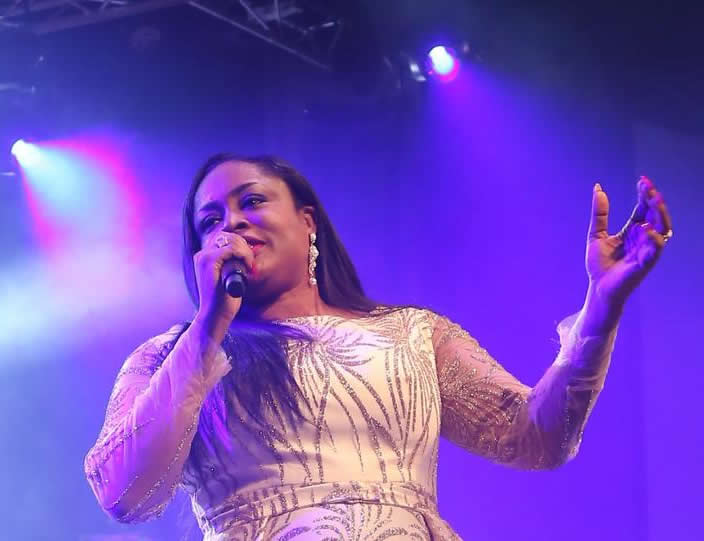
Sinach's 'Way Maker' became the most-sung worship song on Earth by 2020 — after American artists' covers got the chart placements, the awards buzz, and, for a while, most of the credit.
“Way Maker” is not a complicated song, and that’s mostly the point of it. Nigerian worship leader Sinach released it in May 2015, built on a repeated declaration — “You are Way Maker, miracle worker, promise keeper, light in the darkness” — over a simple chord bed that exists to be sung by a room of people who don’t need a lyric sheet after the first pass. As a composition, judged the way a pop single gets judged, there isn’t much here: one central hook, minimal harmonic movement, a structure built entirely around repetition doing the emotional work a bridge or key change would do elsewhere. That’s not a flaw so much as a different design goal — this is congregational music, engineered for a room to sing back, not headphones to admire alone — but it’s worth being honest that “simple” and “effective” aren’t the same claim, and this song’s real case rests on the second one.
It earned that case at a scale almost no worship song reaches. By 2016, the original had racked up over 150 million YouTube views. In June 2020, it topped Christian Copyright Licensing International’s Top 100 — a chart measuring how often a song actually gets played in churches, the closest thing this genre has to a Hot 100 — and the CCLI number is the real evidence for the song’s actual reach: not a chart placement bought by radio promotion, but a direct count of how many congregations chose to sing it. It’s since been translated into roughly 50 languages and, per Christianity Today’s reporting, became the reflexive song people turned to in viral hospital and parking-lot singalongs during the earliest weeks of COVID lockdown in 2020 — a genuinely organic adoption curve most songs, sacred or secular, never get close to.
The uglier part of the story is who got credit for that reach. Michael W. Smith’s version hit No. 1 at Christian radio; Leeland’s and Passion’s covers charted too, and in April 2020 Smith’s and Leeland’s versions became the first two covers of the same song to occupy the Hot Christian Songs top 10 simultaneously — a real, documented first. But per reporting from the Center for Congregational Song, several of those covers’ initial promotional materials and video credits didn’t clearly name Sinach as the song’s writer, even as her own upload was already sitting past 150 million views. She didn’t get her own overdue recognition until May 2020, becoming the first African songwriter to top Billboard’s Christian Songwriters chart — after, not before, the Western versions had already made the song ubiquitous. That’s not a footnote; it’s the same pattern this feature’s Kirk Franklin pick runs into from a different angle — a genre that will absolutely use a Black artist’s material to reach a bigger room, on terms that don’t always include the artist.
7.9/10 — a genuinely global phenomenon built on a deliberately small song, undercut by an industry that took its time crediting the woman who wrote it.
Hero image: Sinach performing live at the Mosaiek Theatre, Johannesburg, August 19, 2016, by Pshegs, licensed under CC BY-SA 4.0.