What a Friend We Have in Jesus (Mahalia Jackson version)
Collected on Gospels, Spirituals & Hymns, Mahalia Jackson's reading of the 1855 hymn carries the specific authority of a voice that spent a civil rights movement and a career testifying to exactly the kind of constancy this song describes.
 By Song Reviews · November 15, 2026
Collected on Gospels, Spirituals & Hymns, Mahalia Jackson's reading of the 1855 hymn carries the specific authority of a voice that spent a civil rights movement and a career testifying to exactly the kind of constancy this song describes.
Mahalia Jackson’s recording of “What a Friend We Have in Jesus,” collected on the Columbia/Legacy compilation Gospels, Spirituals & Hymns, carries a kind of authority that has nothing to do with vocal technique and everything to do with history. By the time Jackson was singing hymns like this one, she had already performed at the 1963 March on Washington, shortly before Martin Luther King Jr.’s “I Have a Dream” speech, and spent decades as the “Queen of Gospel” testifying to exactly the kind of unshaking constancy Joseph Scriven’s lyric describes. When Jackson sings that this friend “knows our every weakness,” it doesn’t read as a performed sentiment – it reads as a conclusion she’d already tested against considerably higher stakes than most singers ever bring to a hymn.
That authority shapes the whole performance. Jackson doesn’t rush toward the hymn’s comfort; she holds back through the verses, letting the melody’s plainness carry the weight before her voice fully opens into the register she’s famous for, so that the eventual lift reads as earned rather than performed for its own sake. It’s the same structural patience this column has noted in her other hymn recordings – restraint used deliberately, not as a limitation she’s working around.
8.5/10 – a voice with the specific, hard-earned authority to make a 19th-century claim about an unshaking friend sound like tested fact rather than comfortable sentiment.
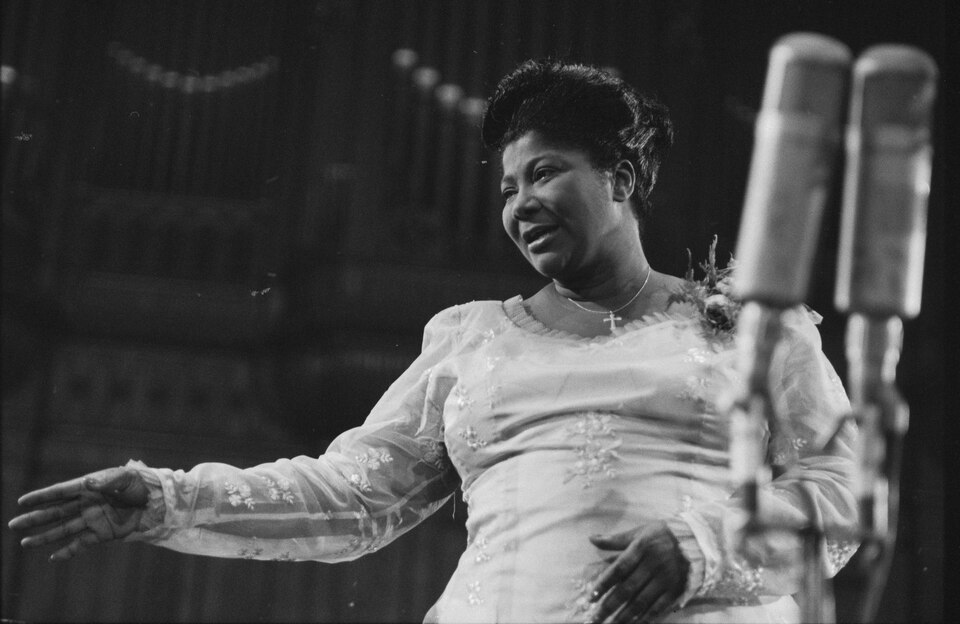
Hero image: Mahalia Jackson in concert, Kongresshaus Zürich, 1961, Comet Photo AG, ETH-Bibliothek Zürich, licensed under CC BY-SA 4.0.