Get Lucky
Throwback Thursday, 2013: the cheapest way to sound like 1979 was to sample it. Daft Punk spent an enormous budget hiring the people who made 1979 instead.
 By Song Reviews · August 20, 2026
 Greatest of All Time!
Throwback Thursday, 2013: the cheapest way to sound like 1979 was to sample it. Daft Punk spent an enormous budget hiring the people who made 1979 instead.
By 2013 the cheapest way to make a record sound like 1979 was to sample 1979. Daft Punk spent an enormous budget doing the opposite: hiring the people who made 1979 and asking them to do it again, live, in a room.
Nile Rodgers plays the guitar on “Get Lucky.” Not a Chic sample — Rodgers himself, in 2013, playing the same clipped sixteenth-note figure he had been playing since the late seventies, on the same Stratocaster he cut those records on. Pharrell Williams sings it slightly under the beat. Thomas Bangalter plays the bass. The robots are on it too, vocoded, and the good joke of the arrangement is that the two literal machines end up the least mechanical thing in it: every human element is locked hard to the grid, and the synthetic voices are the ones allowed to wander.
It should have been a nostalgia exercise. It isn’t, because nothing in it is quoted. A sample is a photograph of a performance; this is a performance, which means it can respond, sit fractionally ahead of or behind the beat, and run six minutes without the loop ever giving itself away. The chord progression is four bars long and never changes for the entire song. You don’t notice. That is the achievement, and it is much harder than it sounds.
Random Access Memories took Album of the Year and “Get Lucky” took Record of the Year at the 2014 Grammys — an outcome that read at the time as the establishment finally rewarding a dance record, and reads now like the last moment a physically played pop single was the biggest song on earth.
Greatest of All Time. Two French robots demonstrated that the most futuristic move available in 2013 was hiring a session guitarist.
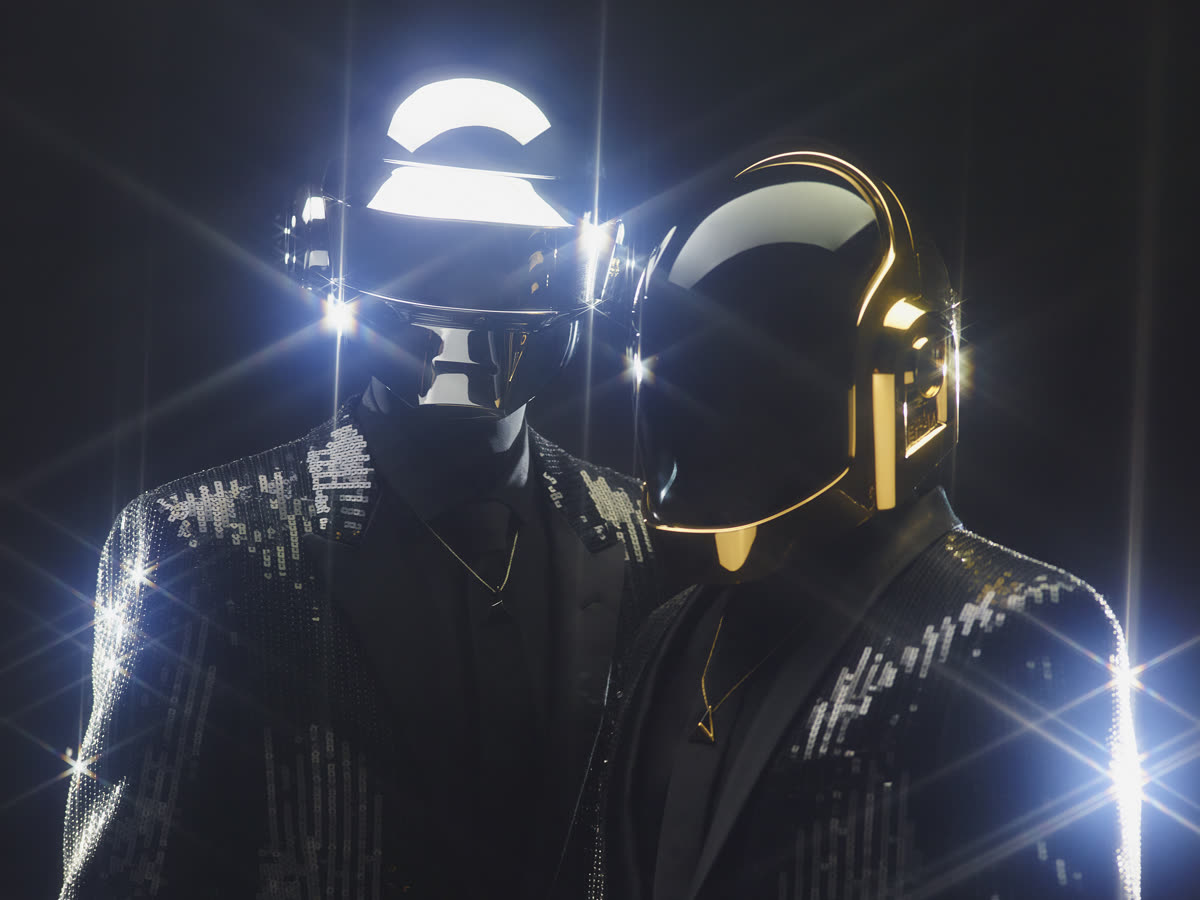
Hero image: promotional photo of Daft Punk after the release of Random Access Memories*, Sony Music Entertainment, licensed under CC BY 4.0.*