Like a Rolling Stone
The organ line that defines Bob Dylan's biggest single was played by a musician who had never touched an organ, on an instrument a producer forgot to have switched off.
 By Song Reviews · September 10, 2026
 Greatest of All Time!
The organ line that defines Bob Dylan's biggest single was played by a musician who had never touched an organ, on an instrument a producer forgot to have switched off.
Bob Dylan recorded “Like a Rolling Stone” over two days in June 1965, released as a single that July 20 – six minutes long at a time when a hit single ran closer to three, a decision Columbia reportedly worried about right up until it became Dylan’s biggest hit. The released take is Take 4 from the second day, after roughly fifteen more attempts hadn’t landed it.
The detail worth knowing sits underneath all of that: the organ part that gives the record its texture – the sound most listeners would name first if asked what “Like a Rolling Stone” sounds like – was played by Al Kooper, a guitarist who had never played organ before that session. Producer Tom Wilson had told Kooper directly he’d be listening, not playing. Kooper moved to the organ bench anyway while the actual keyboardist, Paul Griffin, shifted over to piano, and the instrument only stayed audible in the final mix because, as the story goes, nobody remembered to turn it off. What became one of the most recognizable sounds in Dylan’s catalog is, on record, an uninvited musician faking an instrument in real time.
Greatest of All Time. – the six-minute single that changed what a hit could be, anchored by an organ part nobody actually planned to use.
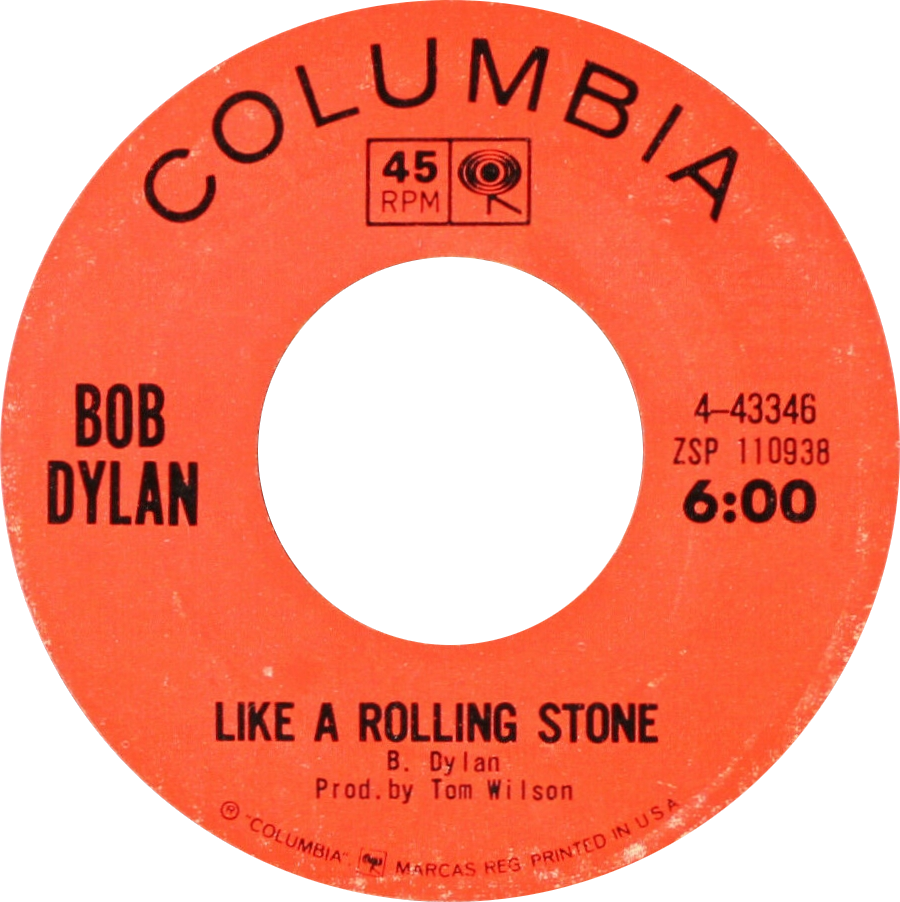
Hero image: Side A label, “Like a Rolling Stone” US 7” single, Columbia Records, 1965. Public domain.