Never Too Much
Luther Vandross spent years singing and arranging vocals behind other artists -- Bowie and Chic among them -- before he wrote and produced the record that made him a star on his own.
 By Song Reviews · September 24, 2026
 Greatest of All Time!
Luther Vandross spent years singing and arranging vocals behind other artists -- Bowie and Chic among them -- before he wrote and produced the record that made him a star on his own.
By the time Epic released Never Too Much on August 12, 1981, Luther Vandross was thirty years old and had spent close to a decade as a session vocalist. He had sung background vocals on projects by Roberta Flack and David Bowie, arranged the vocals on Bowie’s Young Americans, and later conducted the background vocals for Chic. The title track was the record where the person who had always been arranging the choir stepped to the front of it.
Vandross wrote and produced “Never Too Much,” which was recorded on July 21, 1981. The credits list Nathaniel Adderley Jr. on keyboards and rhythm arrangement, Marcus Miller on bass, Buddy Williams on drums and Georg Wadenius on guitar, with Paul Riser arranging the strings and horns and background singers who include Cissy Houston and Tawatha Agee. Listen for what that lineup implies: the stacked backing vocals do as much of the hooking as the lead does, and the groove keeps its shoulders loose while the vocal arrangement does the precise work. It is a dance record built by someone who thinks like a vocal arranger, which was exactly Vandross’s resume.
The chart record is modest next to the legend: No. 1 on the R&B singles chart, No. 4 on the dance club chart and No. 33 on the Billboard Hot 100. The album reached No. 19 on the Billboard 200, topped the R&B albums chart, went double platinum and earned two 1982 Grammy nominations, Best New Artist and Best Male R&B Vocal Performance.
Greatest of All Time. A backing singer’s arrangement instincts turned into a lead single, written, produced and sung by the same man.
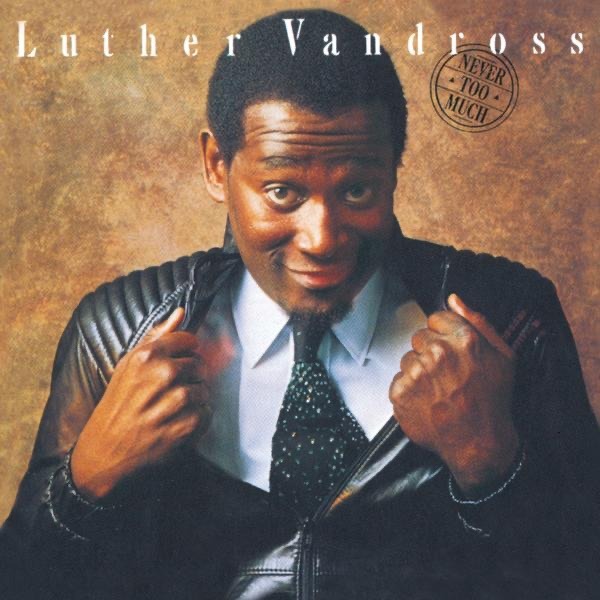
Hero image: “Never Too Much” album cover art, Epic Records. Used under fair use for editorial commentary.