Walk This Way
Run-D.M.C. covered a fading rock band's decade-old album cut in 1986 and accidentally revived both careers at once -- 40 years later, it's still the template for hip-hop/rock crossover.
 By Song Reviews · September 3, 2026
 Greatest of All Time!
Run-D.M.C. covered a fading rock band's decade-old album cut in 1986 and accidentally revived both careers at once -- 40 years later, it's still the template for hip-hop/rock crossover.
Aerosmith’s “Walk This Way” was already ten years old and mostly forgotten outside classic-rock radio by 1986 – a Toys in the Attic deep cut from a band whose commercial fortunes had cratered through the early ’80s. Rick Rubin, producing Run-D.M.C.’s Raising Hell, pushed the group to rap over the song’s guitar riff, reportedly against Run and D.M.C.’s own initial resistance; neither of them particularly liked or knew the source record going in. Rubin brought in Aerosmith’s Steven Tyler and Joe Perry to re-record vocals and guitar for the new version rather than simply sampling the original, turning what could have been a one-sided cover into an actual collaboration between two acts from genres that, at the time, didn’t share radio formats, magazine coverage, or audiences.
The gamble worked in both directions at once. Run-D.M.C. got a crossover hit that pushed Raising Hell to platinum status and onto MTV in heavy rotation, a channel that had mostly kept hip-hop off its airwaves up to that point. Aerosmith, meanwhile, got the single that jump-started a genuine comeback – Tyler and Perry’s cameo introduced the band to a teenage audience with no memory of their 1970s peak, setting up the run of hits that would follow later in the decade. Neither outcome was guaranteed by the source material; a decade-old rock deep cut and a rap crew skeptical of the whole idea aren’t obviously a hit waiting to happen.
Greatest of All Time! – the record that proved rap and rock could occupy the same three minutes without either genre disappearing into the other, and revived a legacy act in the process.
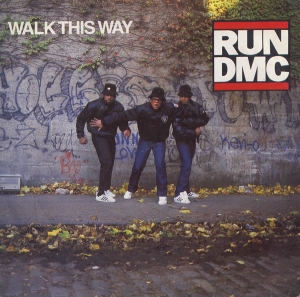
Hero image: “Walk This Way” single cover, 1986, Profile Records (sound recording); Tyler/Perry courtesy of Geffen Records. Used under fair use for editorial commentary.